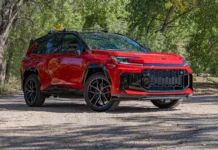
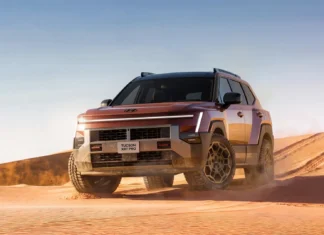
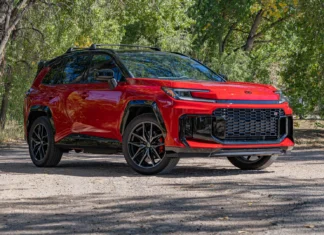
Following 2024’s Neolun concept, the production-spec Genesis GV90 makes its formal debut!
Family SUVs are big business for virtually every automaker, and both the Genesis GV70 and GV80 took the fight to its rivals with elegant styling and a huge feature list. The trend now continues with the 2027 GV90, which premiered in San Francisco Wednesday night as the brand’s all-new (and all-electric) seven-seater flagship.
Riding on an exclusive eMP — or Electric Mobility Prime — platform, the 2027 Genesis GV90 makes a major departure from the GV80 in terms of size, platform and powertrain. Under its skin, this 208-inch-long SUV riding on a 127.8-inch wheelbase packs a large-capacity battery and two electric motors, rather than a turbocharged V6 engine. In fact, the 123.5-kWh battery powers a 322-horsepower front motor and a 335-horsepower rear motor, in a package that brings a sizable presence with styling that almost exactly matches 2024’s Neolun concept.
With 657 horsepower and 590 lb-ft of torque combined, the GV90 is also Genesis’ most powerful SUV yet. It also delivers some pretty impressive range, offering up 366 miles (590 km) on a charge according to the company’s internal R&D testing. Real-world figures may vary a bit, but when it comes to charging, Genesis also says you can recharge the GV90 from 10-80% in 22 minutes using a 350-kW fast-charger.
The 2027 Genesis GV90 further ups its gas-powered siblings with features dual electronic limited-slip differentials at each axle, multi-chamber air suspension and five-degree rear-wheel steering to make this huge SUV more maneuverable than you might think.

There are actually two versions of the GV90, including the Neolun with ‘Arch Gate’ coach doors.
More than any performance figures for the new GV90, though, the major draw is the styling and the luxurious interior. Outside, the GV90 follows the familiar styling cues with which we’re familiar, with thin full-width lights along the front, back and even down the sides. What really draws your eye, apart from the coach-built doors, are the 24-inch forged wheels on the Neolun First Edition, an “ultra-exclusive limited release” model for the brand’s “elite customers”. Even on the standard GV90, though, both the body and wheels exude the car’s overall size, while a color palette encompassing 16 exterior options offers up a surprising range of selections for a luxury SUV.
Then there’s the interior. Before we get into the huge screen, there’s the situation near the steering wheel. The GV90 uses a “Power Control System” with a moving gear selector. There is no start button — once you get in the vehicle, the column shifter moves from the 12 o’clock to the 2 o’clock position, while the tweeters on the 25-speaker Bang & Olufsen sound system, the crystal sphere controller and the pop-up display all move around, signaling the car is ready to drive.

Driving or not, that pop-up OLED display dominates the GV90’s cabin space, though this unit has another trick other infotainment screens don’t: it actually changes size. While driving normally, the screen measures out to 23.6-inches. Genesis calls this a “cinematic display”, however, because you can press an extension button when parked that raises the screen by another 3.5 inches that “transforms” it into a 24.6-inch display, for an even more immersive experience.
Sticking with that screen, the GV90 further uses a new Android-based Pleos Connect operating system. Apart from featuring a built-in app store that allows you to load a wide range of third-party apps into the experience, you also (naturally) get an AI agent to help you out as well, called Gleo AI.
If you don’t need the full seven seats, the earlier mentioned Neolun model gives you just four seats for a VIP experience akin to what you’d get in a Mercedes-Maybach GLS. In this hyper-luxe model, you get a real wood veneer floor with a radiant heat system, while the front row gets motorized swiveling seats that rotate 180 degrees to create a face-to-face lounge like setup.
Even if you don’t go for the Neolun, the regular GV90 just keeps on going with the list of cabin features. A metal-coated heated windshield offers up a way to remove frost and condensation without relying on the climate control alone. Radiant heat warmers are integrated into all the first- and second-row touchpoints like armests, side panels and door trims to supplement the heated and ventilated seats. A Smart Vision Roof uses a Polymer Dispersed Liquid Crystal film so you can control the roof’s transparency across six different zones.


Pricing and availability?
With a frankly bewildering range of gadgetry, its size and its on-paper performance, the 2027 Genesis GV90 definitely has all the hallmarks befitting a family flagship.
That said, two pieces of information we don’t have on this new model are an exact on-sale date or pricing. We should see this range-topping model arrive in showrooms as a 2027 model sometime next year. As for how much it will cost, base prices will almost certainly start around the $100,000 range. The Neolun, for its part, could cost significantly more than that, though even that crazily luxurious version with coach doors may well come in less expensive than the Mercedes-Maybach GLS, and certainly something like a Bentley Bentayga.