SPONSORED CONTENT
Modern cars have evolved into complex technological organisms where software controls literally everything — from suspension systems to entertainment content. McKinsey analysts estimate that premium electric vehicles now contain up to 300 million lines of code, five times more than Windows 10. This shift forced traditional carmakers to rethink their business models and actively seek partnerships among automotive software development companies.
The industry faces massive digital transformation right now. Volkswagen poured €7 billion into Cariad, their software subsidiary. General Motors bought Cruise Automation for over a billion dollars. Tesla proved cars can update over-the-air like smartphones. New challenges emerged: cybersecurity for autonomous systems, platform compatibility, constant updates, and integration with city infrastructure. This article examines leading market players helping carmakers tackle these tasks.
The State of Automotive Software Market in 2026
The automotive software market shows impressive momentum. Gartner forecasts global investments in automotive software solutions providers will exceed $45 billion by end of 2026. The reason’s clear: software now defines competitive advantages more than engine power or body design.
Technology Trends Shaping the Industry
Carmakers actively test revolutionary solutions. BMW presented the iVision Dee prototype with Mixed Reality system projecting augmented reality directly onto windshields. Mercedes-Benz launched MB.OS platform, calling it their “operating system of the future” — unifying all vehicle functions in a single ecosystem.
Hyundai tests V2X (Vehicle-to-Everything) technology, letting cars exchange data with other vehicles, traffic lights, and road infrastructure. Chinese manufacturer NIO launched Battery as a Service, where complex battery swap logistics runs entirely on artificial intelligence.
The Software-Defined Vehicle (SDV) concept deserves separate mention. This approach means vehicle characteristics and functions can change through software updates throughout ownership. Volvo already lets owners purchase additional features via mobile app — from power increases to autopilot system activation.
Top 10 Automotive Software Developers in 2026
1. DXC Technology
American corporation DXC Technology became a key partner for global carmakers searching for automotive industry software solutions that integrate with existing factory infrastructure and dealer networks. The company specializes in comprehensive solutions for digital transformation of automotive business.
Key Focus Areas:
- Connected car platforms
- Product lifecycle management systems (PLM)
- Cloud infrastructure for autonomous systems
- Digital transformation of manufacturing processes
DXC Technology works with giants like Daimler, where they implemented predictive maintenance systems analyzing telemetric data from millions of vehicles to forecast failures before they occur. Additionally, the company developed a platform managing electric vehicle charging station ecosystems covering over 15 European countries.
2. Luxoft (DXC Company)
Swiss company Luxoft, now part of DXC group, earned reputation as experts in complex embedded systems development. They created software for Mercedes-Benz MBUX digital instrument clusters and worked on BMW Level 3 autopilot system.
Core Competencies:
- ADAS (Advanced Driver Assistance Systems) development
- Digital cockpit and HMI creation
- Automotive software testing and validation
- Android Automotive and Apple CarPlay integration
Luxoft’s team includes over 5,000 engineers working exclusively on automotive projects. They implemented Agile methodology for automotive development, cutting time-to-market for new features from 18 to 6 months.
3. EPAM Systems
The company created a separate Automotive Practice unit specializing in digital experience for automotive sector. They developed General Motors’ mobile app with remote vehicle control functionality and personalization platform for Volkswagen ID series.
Expertise:
- Mobile app development for carmakers
- Car-sharing and ride-hailing platforms
- Vehicle subscription management systems
- Big data analytics for production optimization
4. Thoughtworks
Consulting firm Thoughtworks helps automotive technology companies transform legacy systems into modern digital platforms. They worked on modernizing Tesla’s online sales system and created an electric vehicle fleet management platform for European market.
Specialization:
- Microservices architecture for automotive
- DevOps and CI/CD for embedded systems
- Data platforms and machine learning
- Mobility-as-a-service digital ecosystems
5. Wipro
Indian tech giant Wipro invested over $200 million in automotive division development. The company established an autonomous driving lab in Silicon Valley and a Center of Excellence for electric vehicles in Bangalore.
Key Solutions:
- Wipro HOLMES platform for predictive analytics
- Electric powertrain control systems
- Safety systems software (NCAP)
- Vehicle-to-cloud communication solutions
Wipro developed a cybersecurity system for Renault-Nissan Alliance protecting over 10 million connected vehicles from hacker attacks. The system uses artificial intelligence to detect anomalous behavior and blocks threats in real-time.
6. Cognizant
American Cognizant created a specialized Connected Products unit focusing on IoT solutions for vehicles. They developed telematics platform for Ford Commercial Solutions, helping companies manage commercial transport fleets.
Main Services:
- Infotainment systems development
- Vehicle data management platforms
- Voice assistant integration (Alexa, Google Assistant)
- Driver condition monitoring systems
7. Infosys
Indian Infosys collaborates with Daimler, Volkswagen Group, and Rolls-Royce Motor Cars. The company developed Infosys Cobalt platform for migrating automotive systems to cloud and implemented digital twins solutions for production lines.
Competencies:
- Simulation and virtual testing
- Battery Management Systems (BMS) for electric vehicles
- Blockchain for supply chain transparency
- AR/VR solutions for training and maintenance
8. Tata Consultancy Services (TCS)
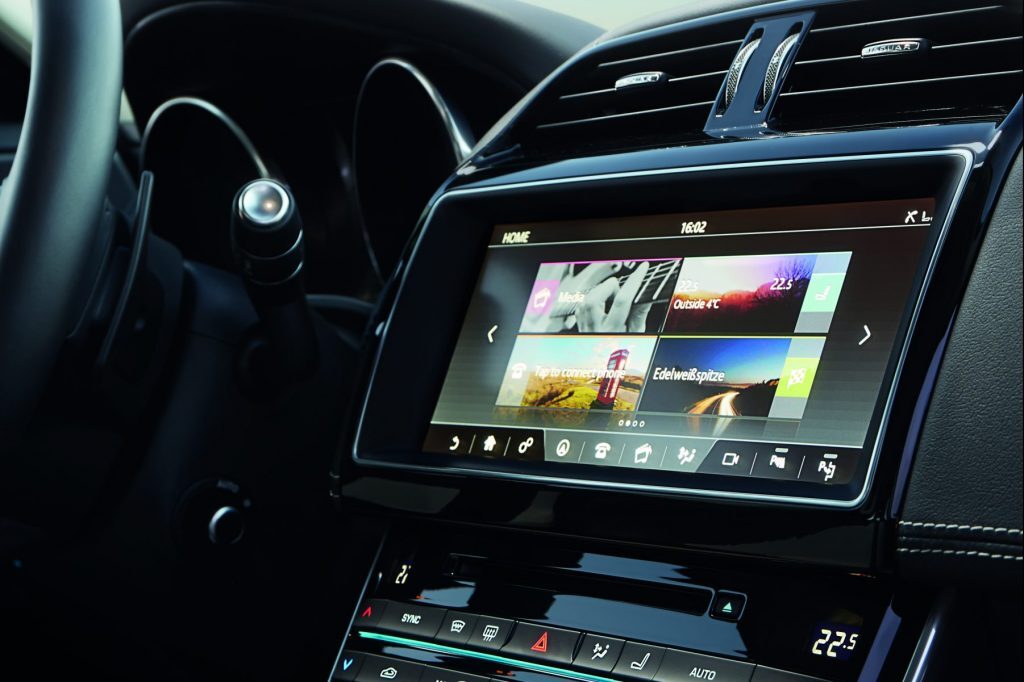
TCS created unique TCS Autonomics platform used for developing and testing autonomous systems. The company partners with Jaguar Land Rover and created InControl personalization system for their models.
Specialization:
- Simulators for Level 4-5 autonomous driving
- Computer vision systems
- OTA (Over-The-Air) update platforms
- Sensor and camera data management
TCS built one of the largest virtual proving grounds for testing autonomous vehicles, where millions of kilometers get simulated daily under various road conditions.
9. Capgemini
French Capgemini Engineering (formerly Altran) employs 55,000 engineers in automotive sector. They worked on Porsche Taycan electric platform and developed control systems for Ferrari hybrids.
Key Directions:
- Powertrain electrification
- Active safety systems
- Energy management platforms
- 5G integration into automotive systems
10. GlobalLogic (Hitachi Group)
American GlobalLogic specializes in creating user experience for automotive interfaces. They developed gesture control system for BMW and voice control platform for Audi.
Expertise:
- UX/UI design for automotive
- Driver recognition systems
- Settings personalization platforms
- Smartphone-vehicle integration
Industry Challenges: Why Carmakers Seek External Partners
Traditional automotive companies faced an unexpected problem: creating quality software requires completely different corporate culture and processes than manufacturing engines. Volkswagen spent four years and billions of euros attempting to build proprietary software platform, but project delays postponed several ID series model launches.
Main Industry Challenges:
Talent Shortage
Manpower Group research shows demand for automotive software engineers exceeds supply by 3.5 times in 2026. Experienced specialists with AUTOSAR, ISO 26262 functional safety, and ADAS systems development receive salary offers from $150,000 to $300,000 annually in the US. Traditional carmakers struggle competing with tech companies for talent.
Integration Complexity
Modern vehicles contain over 100 electronic control units (ECUs) from different suppliers. Ensuring their seamless interaction presents a massive engineering challenge. Ford spent two years fixing software bugs in SYNC 3 system, costing the company over $3 billion through recalls and reputation damage.
Innovation Speed
Traditional vehicle development lifecycle spans 5-7 years, while software updates every few months. This mismatch means new models hit markets with outdated software. Toyota acknowledged this problem and launched Woven Planet Holdings, investing $800 million in building proprietary software ecosystem.
Cybersecurity
In 2025, University of California researchers demonstrated remote control of Tesla Model 3 through Bluetooth vulnerability. Such incidents force automotive software solutions providers to invest millions in penetration testing and developing multi-layered protection systems.
Regulatory Requirements
European Union introduces mandatory cybersecurity certification for all new vehicles (UN R155 regulation), plus requires Software Update Management System monitoring (UN R156 regulation). Meeting these standards demands deep expertise and significant investments in verification processes.
Collaboration Model with automotive technology companies
Instead of fully internalizing software development, most carmakers chose hybrid model. They create small internal teams defining architecture and strategy but engage external partners for implementing specific components.
Stellantis (conglomerate uniting Peugeot, Citroen, Jeep, Dodge) established Software & Services BU with 4,500 in-house engineers while simultaneously working with dozens of external automotive software development companies for developing specific modules. This model allows scaling teams based on project needs and quickly adapting to new technologies.
General Motors launched Ultifi platform connecting developers worldwide. External companies can create apps for GM vehicles using open APIs. This ecosystem model resembles Apple’s AppStore, allowing rapid vehicle functionality expansion without carmaker involvement.
Conclusions: The Future of Automotive Software
Software definitively became the heart of modern automobiles. Boston Consulting Group forecasts software and electronics will comprise 50% of vehicle value by 2030 versus 30% in 2026. This radically reshapes industry landscape.
Companies understanding this transformation and actively investing in automotive software solutions providers will gain competitive advantages. Tesla proved cars can sell with basic functionality, then monetize through software updates and subscriptions. BMW earned over €1 billion in 2025 selling options through mobile app — from heated steering wheels to extended autopilot features.
Meanwhile, the industry becomes more open. Traditional model where each carmaker created proprietary closed systems gives way to standardized platforms and ecosystems. COVESA initiative (formerly GENIVI Alliance) unites over 160 companies creating open automotive software standards. Google released Android Automotive OS, already used by Volvo, Polestar, Honda, and Renault.
Coming years will reveal which automotive technology companies can not just adapt to new reality but become its creators. One thing’s obvious: the era when cars were purely mechanical products has ended. Now they’re complex computer systems on wheels, constantly evolving through software updates and integration with cities’ digital infrastructure. Companies offering the best digital experience will define rules in automotive industry for the next decade.