In this week’s Ask Nathan:
- Hyundai Santa Fe EREV updates?
- My take on the 2027 Mazda CX-5.
The first question comes from a reader who asked about the Hyundai Santa Fe EREV.

Q RE: Hyundai Santa Fe EREV information?
hey Nathan,
How are you?
I just saw some articles from Hyundai’s investor day that say a Santa Fe EREV will be coming in the first half of 2027.
Should we expect a similar base price point in the $30ks as the current Santa Fe? Do you think towing capacity would be closer to the 3500+ pounds of the regular Santa Fe instead of the 2000 pounds of the hybrid?
If this new drivetrain can tow a decent amount and is available by the spring at a good price, I may get one for road trips next summer. (hopefully gas prices have gone back down to normal by then, so cross country drives have more flexibility that stopping to charge when towing a trailer)
Have you guys heard any updates on the Honda Base Station trailer? Do you expect it to be available sometime before next summer?
Do you know if any other EREVs will be available by early next year?
Thanks,
– Mark
A: Hyundai looks like they are building a bunch of Extended Range Electric Vehicles (EREVs), starting with the Santa Fe.
Hyundai is betting that there’s still plenty of room between a conventional hybrid and a full battery-electric vehicle. The company’s answer is the EREV, and the first Hyundai to use the technology is expected to be the Santa Fe.
Hyundai Motor says it plans to launch or refresh more than 100 models globally by 2030, with multiple powertrain options available as the industry continues its transition toward electrification. Among those powertrains will be Hyundai’s first EREV, which combines an electric-drive experience with an onboard gasoline engine that can generate electricity when needed.
The new Santa Fe EREV is expected to arrive in the first half of 2027 and could be one of the more interesting alternatives to both conventional hybrids and today’s EVs.
Hyundai says the Santa Fe EREV is expected to deliver more than 600 miles of total driving range. That’s a significant number, particularly for drivers who like the smooth, immediate response of an EV but aren’t ready to deal with charging stops on longer road trips. It could be a “win-win,” but some will still complain.
The basic idea is relatively simple. Rather than relying solely on a large battery, as a traditional EV does, an EREV uses electric motors to drive the wheels while a gasoline engine acts primarily as an onboard generator. For everyday driving, the vehicle can operate much like an EV. When the battery gets low, the gasoline engine provides electricity to keep the vehicle moving.
And Hyundai isn’t treating the Santa Fe EREV as some low-volume experiment. The company says it will be built in the United States at Hyundai Motor Manufacturing Alabama, which could also help Hyundai keep production costs competitive and potentially make the vehicle eligible for certain U.S. incentives, depending on the rules in place when it goes on sale.
The Big Question: How Much Will It Cost?
This is where things get interesting.
The current Santa Fe occupies a relatively affordable position in Hyundai’s lineup, with gasoline versions starting in the $30,000 range. An EREV will inevitably require additional hardware, including a larger battery, electric motors, power electronics and the gasoline generator—so I wouldn’t expect Hyundai to simply drop the new drivetrain into the existing lineup without a significant price premium.
Still, Hyundai has an opportunity here.
If the company can keep the Santa Fe EREV somewhere within shouting distance of the $40,000 range, it could become a very attractive road-trip vehicle. A starting price in the upper $30,000s would be particularly aggressive.
That’s also why I wouldn’t automatically expect the EREV to have a six-figure luxury-EV-style price tag. Hyundai is positioning itself as a mainstream manufacturer, and the Santa Fe is an important volume product. The economics only make sense if Hyundai can put this technology into the hands of relatively ordinary buyers.
What About Towing?
This may be the more important question for certain Santa Fe buyers.
The conventional Santa Fe can tow considerably more than the current Santa Fe Hybrid, depending on configuration. The hybrid’s lower towing capacity is one of the compromises that comes with its powertrain. The 2026 Hyundai Santa Fe non-hybrid offers a higher maximum towing capacity of up to 4,500 pounds, whereas the standard Santa Fe Hybrid maxes out at 2,000 pounds.
An EREV could potentially change that equation. Maybe.
Towing capacity is ultimately determined by much more than motor output. Hyundai will have to consider battery cooling, sustained power delivery, vehicle weight, suspension, brakes, transmission, or reduction gearing, hitch structure and, perhaps most importantly, how quickly the battery can be depleted while pulling a heavy trailer.
There’s another interesting consideration: the gasoline engine’s job is essentially to make electricity.
That means Hyundai can theoretically design the generator specifically around the vehicle’s average electrical demand rather than using a conventional engine/transmission combination. Whether that results in a higher towing rating remains to be seen.
I’d be watching for a towing capacity of at least 3,500 pounds. If Hyundai can get the EREV to match or exceed the conventional Santa Fe’s towing capability while retaining that 600-plus-mile total range, it could be a killer road-trip machine.
And for anyone pulling a small camper, that’s potentially more useful than having another 100 miles of theoretical EV range.

And Then There’s the Honda Base Station Travel Trailer
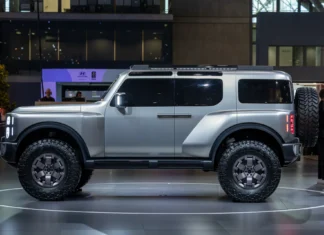
It’s super cool, in the right context, for the right consumer. It’s nother interesting piece of the road-trip puzzle is Honda’s Base Station trailer concept. I wish it was large enough inside to hold a FourTrax Rubicon 700 4×4, or even a Talon 1000R. The rear does open, but it’s tight inside. Also, I think they should benchmark Happier Camper, which makes the most with a tiny space.
The idea of pairing an electrified vehicle with a purpose-built trailer is fascinating, particularly as automakers try to rethink what a road-trip vehicle can be. But there’s still a big question about when, or whether we’ll see something like the Honda Base Station become a production reality.
For now, I wouldn’t plan a summer road trip around being able to buy one. Until Honda provides firm production and availability information, it’s better viewed as an interesting indication of where the company thinks recreational travel could be headed..
Will There Be Other EREVs?
Hyundai won’t be operating in a vacuum.
EREV technology is attracting increasing attention because it offers automakers a way to reduce fuel consumption and provide an EV-like driving experience without requiring customers to depend entirely on charging infrastructure. It helps mitigate range anxiety too. If the Santa Fe EREV arrives in the first half of 2027 with 600-plus miles of total range, a reasonable price and useful towing capability, it won’t necessarily need to be the cheapest EREV on the market. It just needs to be one of the most practical.
And that’s ultimately what makes this vehicle interesting.
The Santa Fe EREV isn’t trying to convince someone that gasoline is dead. It isn’t asking a traditional SUV buyer to completely change their driving habits. Instead, it offers a compromise: drive electrically most of the time, but keep the ability to travel hundreds of miles without planning your route around charging stations.
For drivers who want the benefits of an EV but still take long cross-country trips—or tow a trailer—that could be exactly the compromise they’ve been waiting for.
Now Hyundai just needs to tell us how much it will cost and how much it can tow.
— N
The last question comes from a fan who was looking at the all-new Mazda CX-5.
Q (Via Facebook): RE: What do you think of the 2026 Mazda CX-5?
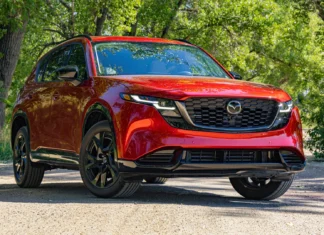
I was looking at replacing my 2020 Mazda 3 with a CX-5, but I’m not liking what I’ve read. Also don’t think much of the new front end.
What do you think? I know you have owned one. Let me know what you think. Please
— Curtis B


A: The new Mazda CX-5: sometimes change isn’t…..
Many of you know that I am a bit of a Mazda fanboy. I’m not hiding it. They usually make great vehicles that are often fun to drive. My family have owned five Mazda or Mazda-based vehicles over the decades, including a previous generation Mazda CX-5.
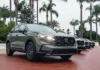
I opened with that as I am saying here and now that the new 2026 Mazda CX-5 is regrettable. Compared with the rest of their fleet, it feels discounted, less connected to the driver, and kind of unattractive. I was disappointed.
The positive side: it’s much more comfortable, rides better and has more cargo space. My biggest disappointment was the massive infotainment screen. The Premium model has a 15.6 inch screen that contains audio and environmental controls. Big mistake. They are not haptic, which is an even bigger mistake. You have no idea if you’re cranking airspeed up, or something else. And you must take your eyes off the road to use the system.
Finally, that huge screen eats into the dashboard design that went from chic to bleak. The designers lost the plot.
I would (highly) recommend the Mazda CX-50. It’s not as big inside, but it still looks and feels like a proper Mazda.
— N