Remember Volkswagen’s XL1 prototype? This successor EV clocked up nearly 800 miles of driving range.
A decade ago, VW rolled out a funky, limited-production car called the XL1. Back then, the “Super Efficient Vehicle” emerged as a 1.0-liter diesel plug-in hybrid capable of achieving a claimed 240 mpg and an all-electric driving range of just over 30 miles. Now, the automaker is at it again, but just debuted its Mission Efficiency as a full battery-electric car with a similar look to the L1/XL1 series, as well as record-setting range.
In its reveal, Volkswagen says the Mission Efficiency is “the world’s most efficient near-production car” (hang onto that last part for a minute), and proved its case by driving the car from its Wolfsburg development center in Germany, through Poland and the Czech Republic to the Austrian capital of Vienna. When all was said and done, the test drive covered a distance of 1,278.36 kilometers (or 794.34 miles).
It’s worth noting the idea wasn’t to see how far it would go on a single charge — VW did recharge the 54.9-kWh battery once during the journey — but to measure efficiency over the trip’s distance. That number measured out to 7.51 kWh per 100 km, or 9 miles per kilowatt-hour, including charging losses, at an average speed of 67.72 km/h. The vehicle did run at speeds up to 138 km/h (about 85 mph), but averaged about 42 mph.


The Volkswagen Mission Efficiency owes much of its claim to that name to its aerodynamics. The drag coefficient of 0.158 is far beyond what other production cars, let alone production EVs, manage. Even with the unconventional styling, though, it is still technically a 2+2, with two doors and two rows of seats.
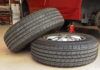
VW’s ultra-efficient EV also borrows some elements from the electric ID.Polo, including the front suspension setup and a 133-horsepower electric motor. The automaker worked with the brake supplier to switch out the conventional hydraulic brake system out back for an electromechanical system instead, with the aim of reducing friction losses and improving stability while cornering through variable brake force distribution between the electric brakes. The Mission Efficiency also uses a concept tire from Continental, based on the EcoContact 7 series for lower rolling resistance and better range.

Volkswagen could build it…but it won’t commit to doing so right now
From the aerodynamics to the battery design, a 370-watt solar system on the roof and truck lid and lightweight strategies like the body panels and a Bluetooth speaker in place of a built-in audio system, the Volkswagen Mission Efficiency takes a simplistic approach to achieve such massive driving range. Going back to that “near-production” comment, too, VW says it has the technical capability to bring this forward to full production.
For the moment, however, it does not seem like that will be the case. While it does incorporate large-scale production elements to the front-wheel drive EV, this looks to be more of a record breaker and technical study. That may change, but we’ll have to wait and see as conditions continue to change. With the uncomfortable shift in fuel prices, folks in Europe particularly may ultimately clamor for cars like this to actually make it to full-scale production and retail sale.