In this week’s Ask Nathan:
- Will the Volkswagen ID. Cross come to the USA?
- I got the new Mitsubishi Montero / Pajero wrong.
The first question comes from a fan who wants to see the Volkswagen ID. Cross come to our shores.

Q (Via Facebook): RE: Will the Volkswagen ID. Cross come to America?
Hi Nathan.
I think Volkswagen is in some deep trouble. Things are looking terrible, and I don’t think there’s a simple solution. Then I began to think about the overseas ID Cross electric vehicle that they’re coming out with. It looks super cool, but I hear it’s not coming to the USA.
I think it’s a huge mistake, considering they need to completely revamp their brand and start selling vehicles. If they play their cards right, and make it rugged enough to work well off-road, it might be a good alternative for some people who cannot afford that new electric jeep. What do you think about that?
– J Hodges
A: Yup, Volkswagen needs a few winners right about now.
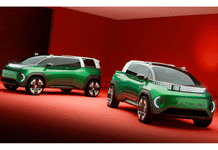
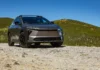
Honestly, I’d like to see it happen. I really like what Volkswagen has done with the ID. Cross design. When the concept first appeared, I wondered if it would actually make production or become another cool Volkswagen tease that disappeared into a design studio. Thankfully, we now know it is going into production for Europe in late 2026.
The problem is getting it here.
The European ID. Cross is a genuinely compact SUV, measuring about 163 inches long, and it’s built on an updated MEB+ platform with front-wheel drive. It will be offered with 37-kWh and 52-kWh batteries, with the larger pack producing up to 211 horsepower and offering roughly 265 miles of European WLTP range. Charging tops out at 105 kW. None of those numbers are particularly impressive for the American market, and there is currently no announced all-wheel-drive version.
That’s the biggest problem. Americans say they want smaller vehicles, but then we go buy SUVs the size of small apartment buildings. A little front-wheel-drive electric crossover is a difficult sell here, even if the starting price in Europe is expected to be around €28,000.
Volkswagen also hasn’t confirmed that the ID. Cross is coming to the United States. I understand the hesitation. Bringing a small vehicle here requires a significant investment, and the American market hasn’t exactly been kind to small cars.
Still, I really hope Volkswagen finds a way. Give us more range, competitive pricing and, preferably, all-wheel drive, and I think the ID. Cross could be an interesting little competitor. More importantly, I love the design. It looks friendly, distinctive and much more like a Volkswagen than some of the company’s previous ID models.
So, unfortunately, I don’t have good news about an American version right now. But I’m keeping my fingers crossed. If VW decides the ID. Cross itself isn’t right for America, I hope at least some of this design language makes it across the Atlantic.
And yes, VW, I’ll take mine with AWD.
— N
The last question comes from a viewer who caught me in a big mistake when it comes to the all-new Mitsubishi Pajero (Montero).
Q (Via Facebook): RE: You screwed up with the Pajero.
Double check your facts about the Pajero. I think you’re off about a few thigs.
— S Sam 9080
A: You’re right: I messed up.
You’re absolutely right, Sam. I completely screwed this one up.
I was so busy flipping and flopping over what Mitsubishi was going to do with the new Pajero, or Montero as Americans know it, that I didn’t bother fact-checking myself. That’s on me.
It turns out I was wrong about the platform. The new Pajero is not related to the Nissan Armada or Infiniti QX80. Mitsubishi has confirmed that it is built on the beefy ladder-frame architecture from the Triton pickup, with a model-specific cabin and completely different front and rear suspension. So while it shares its basic architecture with the Triton, it isn’t simply a Triton with an SUV body slapped on top.
And the mechanical differences are significant. The new Pajero gets a 2.4-liter clean-diesel four-cylinder with a single variable-geometry turbocharger, producing around 204 horsepower according to published specifications and up to (about) 354 lb-ft, of torque. It is paired with a newly developed eight-speed automatic and Mitsubishi’s Super-All Wheel Control and Super Select 4WD-II systems. It also gets independent double-wishbone front suspension and a five-link solid rear axle.
The dimensions are pretty serious, too. It’s 193.7 inches long, 75.8 inches wide and 75.2 inches tall, with a 112.9-inch wheelbase and 9.1 inches of ground clearance. Mitsubishi quotes a 30.4-degree approach angle, 22.6-degree breakover angle and 25.8-degree departure angle. In other words, this isn’t some soft-roader wearing a Pajero badge. Mitsubishi is clearly aiming this thing at serious off-road SUVs such as the Toyota Land Cruiser and Lexus GX.
Where I was also wrong was assuming Mitsubishi was seriously preparing it for the United States. The company has announced a rollout beginning in Thailand, followed by Japan and Australia, and says the Pajero will eventually reach approximately 100 countries. However, the United States is not among the markets Mitsubishi has specifically announced.

That makes me even more disappointed, because I really wanted this thing to come here. Unfortunately, bringing a Thailand-built diesel SUV into the United States would involve emissions certification, safety requirements, transportation costs, tariffs and all the other wonderful things that make importing vehicles so much fun. And Mitsubishi would have to believe there is enough American demand to justify the expense.
So yes, Sam, you absolutely caught me. I made a logical assumption and treated it like a fact. I should have done the research first, and I’m not going to make excuses for it.
I’m genuinely disappointed in myself because I try very hard to get this stuff right. But that’s exactly why I appreciate people calling me out when I don’t.
As for the Montero, well, that one actually hurts.
I still miss my first-generation Montero more than almost any other vehicle I’ve owned. I really mean that. Seeing Mitsubishi bring the Pajero back as a proper ladder-frame, three-row, serious off-road SUV makes me want one even more.
Now I just need Mitsubishi to figure out how to get one into America.
Thanks for keeping me honest, Sam.
— N