In this week’s Ask Nathan:
- Chrysler makes a comeback?
- Is AI taking over reviews?
The first question comes from a fan on my Facebook page: Is Chrysler coming back?

Q: Via Facebook: RE: The Chrysler comeback.
Hello Nathan, I hope you and the TFL guys are doing well.
Hey, I wanted to ask you a quick question about Chrysler and their turnaround. You and the guys have been talking about this for sometime and finally we’re starting to see something happen. I’m not 100% sure about this because they let me down so many times.
I wanted to let you know that I have a 2013 Chrysler 300 C with the 5.7 L hemi V8 and I still drive it daily. It has over 220,000 miles on it, and other than the brakes and a little bit of electronic work it has been extremely trustworthy. I also replaced the driver seat because I have a big fat ass and I tore up the leather over the past 13 years. I love this car so much and I wish they would keep building quality vehicles like this. Seriously don’t care what anybody says about the 300 C, it’s a fantastic car. When you think about it, it has its roots in a Mercedes platform, which I think is a benefit.
I’m a little concerned about what I’m hearing about chrysler because their new vehicles seem like they might have their roots in French vehicles, which I do not have a very positive impression of. Anyway, what do you think? Do you think that they’re going to make an actual comeback or is it going to be more lip service like it has been for the past 10 years?
— J Flemming
A: That’s a great question, and congrats on your 300C ownership experience!
For years, Chrysler’s product strategy has been simple: sell Pacificas and hope nobody notices.
That may finally be changing.
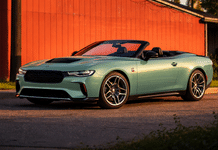
As part of Stellantis’ $70 billion FaSTLAne 2030 plan, Chrysler is reportedly getting three new crossovers: the Airflow, Arrow, and Arrow Cross. The smaller Arrow models will share DNA with Fiat’s upcoming Grizzly platform and, judging by the photos, seem to have spent a suspicious amount of time staring at Volvos. Check out the XC40, the Grizzley is a few inches longer, but shares much of its exterior silhouette with the little Volvo.

The Chrysler Arrow may use the same powertrains the Grizzly offers
There will be three main powertrain choices available for the Grizzly. A 1.2-liter turbocharged, three-cylinder engine is the base power, expected to make about 100-horsepower. Then, there’s a mild hybrid expected to make about 145-hp, and there’s mention of a PHEV that might follow in the near future, but has yet to be announced. Finally, there’s a BEV powertrain that comes with two different sized batteries. There will be a 44 and 54 kWh battery.
There’s no telling whether we’re getting these powertrains, but it’s fair to assume that the systems they use should be similar to what we’re supposdt to get.

The big surprise? Price.
Stellantis wants these vehicles to start somewhere south of $30,000 while offering EV, hybrid, and gasoline powertrains. In today’s market, that’s almost as shocking as finding affordable eggs… or gas.
On paper, the strategy makes sense. Chrysler probably isn’t going to steal buyers from Mercedes-Benz or Lexus, but there may be plenty of customers looking for something stylish, practical, and reasonably priced.
Of course, there’s one tiny detail.
Reliability.
If Stellantis can build these vehicles without requiring owners to become close personal friends with their service advisors, Chrysler may actually have a shot.
I’m rooting for them. The designs look promising, the prices sound attractive, and after years of living on a minivan-only diet, Chrysler finally appears ready to join the rest of the automotive industry.
Stay tuned. Either we’re witnessing a comeback story, or the world’s most expensive group project.
— N
The last question comes from a fan who is worried about AI taking over car reviews in the futre.
Q: Via Facebook: Are you worried about AI writing and shooting videos in the future?
I have seen it being used by so many people so far and it’s hard to tell what is real and what isn’t.
– Anonymous
A: True, it’s already here.
Many outlets simply rewrite AI-generated reviews and product summaries, and some are at least transparent enough to disclose their use of AI. Others go out of their way to avoid it entirely, while a few use AI only for basic editing tasks like punctuation and grammar.
There are ways to spot AI-generated content. A trained eye can often recognize the wording, sentence structure, and certain telltale patterns that tend to appear when a machine is doing the writing.
As for video, I think we’re still a little further away from AI completely replacing human creators.
The good news is that it’s difficult to replace genuine human experience—especially when it comes to driving a car or truck. AI can analyze specifications, compare features, and summarize information, but it can’t tell you what it feels like when a vehicle surprises you on a back road, annoys you during a long road trip, or makes you grin every time you hit the throttle.
At least not yet.
By using logic, good judgment, firsthand experience, and a bit of wit, I think we can still keep our voices authentic in the age of. Frankly, that’s what readers and viewers are looking for in the first place.
– N