It’s been a long time since we’ve had a completely new Volkswagen Atlas.
Back in 2017, Volkswagen gave buyers in North America a new kind of big, flagship three-row SUV to replace the outgoing Touareg. It’s seen three facelifts since, but we’ve technically been working on the first-generation model over the past decade. Now, VW invited Roman and Tommy out to California to test out the Atlas’ first major redesign since it initially hit the streets all those years ago.

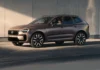
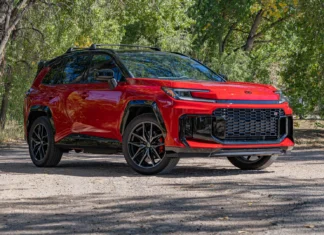
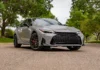
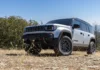
Volkswagen’s overhaul for the 2027 Atlas begins with the styling. This new model rides on an updated ‘Evo’ version of the company’s MQB platform, while it has the same 117.3-inch wheelbase as before. However, it is longer than the old SUV at 203.1 inches, while it’s also a bit wider (78.4 inches) but just a little bit shorter in height (70.4 inches). Up front, the latest atlas gets a smoothed-out front end with a new stacked headlight design, illuminated light strips and badging on some models, and a full-width LED taillight signature out back that delivers a more distinctive look.
Inside, the 2027 Volkswagen Atlas gets a new, yet familiar interior layout. A 10.25-inch Digital Cockpit Pro is standard fare, while you also get either a 12.9-inch (on the SE) or 15-inch infotainment screen on trims other than the base model. The large and upright dash design homes your eye in on that screen where you’ll get to most of your controls. Down below, VW freed up some real estate to fit two wireless charging pads, while the only other buttons/dials are the start button, parking brake and the “Experience Dial”. That is where you actually have physical control over the volume, but when you press it, you get to your drive modes or, when you press it a second time, you get control over the ambient lighting.
Under the hood, the 2027 Volkswagen Atlas packs similar power, by way of a 2.0-liter turbocharged four-cylinder engine. That said, it makes a bit more than before, with 282 horsepower now the baseline. On the flip side, though, this EA888 Evo5 engine actually makes a bit less torque (258 lb-ft), so actual performance is a bit of a wash from the outgoing Atlas. You do get slightly better (and by “slightly”, I mean 1-2 MPG) fuel economy than before, though.
Front-wheel drive is still the default for lower versions of the Atlas, with 4Motion AWD coming in as a $2,000 options on trims where it doesn’t come standard. Like before, the engine mates up to an 8-speed automatic transmission, with a feel that’s generally a bit better in every respect from the older, first-generation model (more in the full review below).
How much does the new Atlas cost?
The second-generation Atlas is VW’s effort to reinforce a flagship SUV for the American market, and prices are shifting to suit. The 2027 Atlas SE, for example, now starts at $43,135. That is $2,350 higher than before, though you do get more gear like the Qi2 wireless chargers, nicer trim and the mode dial for the cash.
For the time being, one thing you don’t get with the updated Atlas lineup is a variety of powertrain options. Not only do you no longer get a VR6, but there’s no efficient hybrid option either. At least, that’s the case for now, as we may have to wait for yet another update to actually see that. It may happen by the end of the decade, but we’re still waiting for some more details on that one.
At the top end, the SEL Premium R-Line comes in closer to the $58,135 price point, though you can shave $695 off if you want a second-row bench rather than captain’s chairs. Is the new Atlas worth nearly $60K? Check out the longer-form review below for more.