With Mazda’s latest CX-5 set to launch in the coming weeks, we compare it to its most popular rivals!
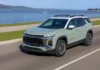
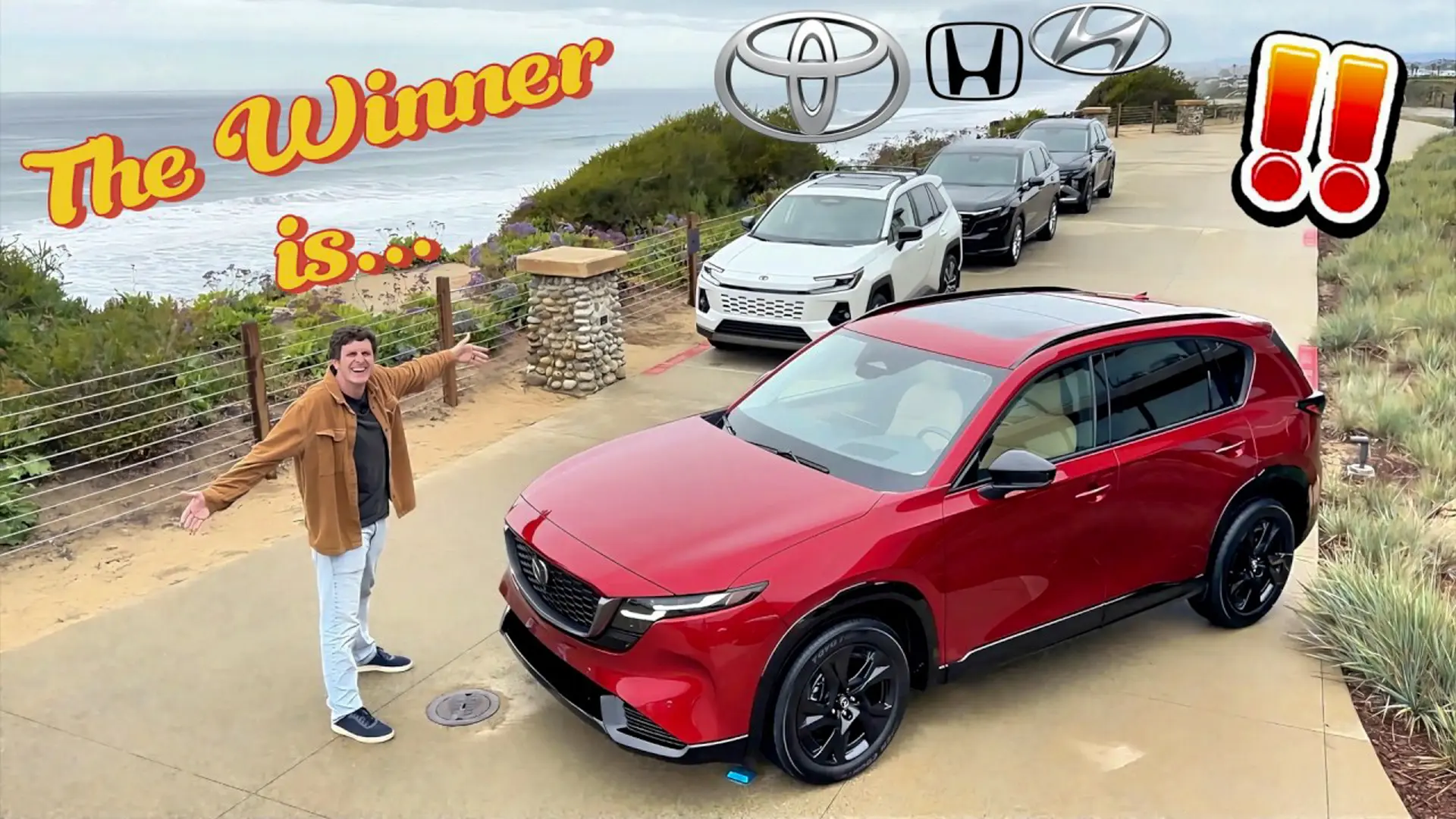
After Mazda officially debuted the third-generation CX-5 last summer and announced pricing this January, Tommy and I are finally getting hands on with this latest model. Not only that, but in addition to bringing us and a host of other reviewers out to San Diego to check out this 2026 Mazda CX-5, the automaker also provided examples of its three best-selling rivals: the Toyota RAV4, the Honda CR-V and the Hyundai Tucson. While we couldn’t actually drive these vehicles (and can’t offer up our driving impressions on the CX-5 just yet — those are coming on February 23 — we can get a feel for how this generation stacks up in terms of styling and general feel.
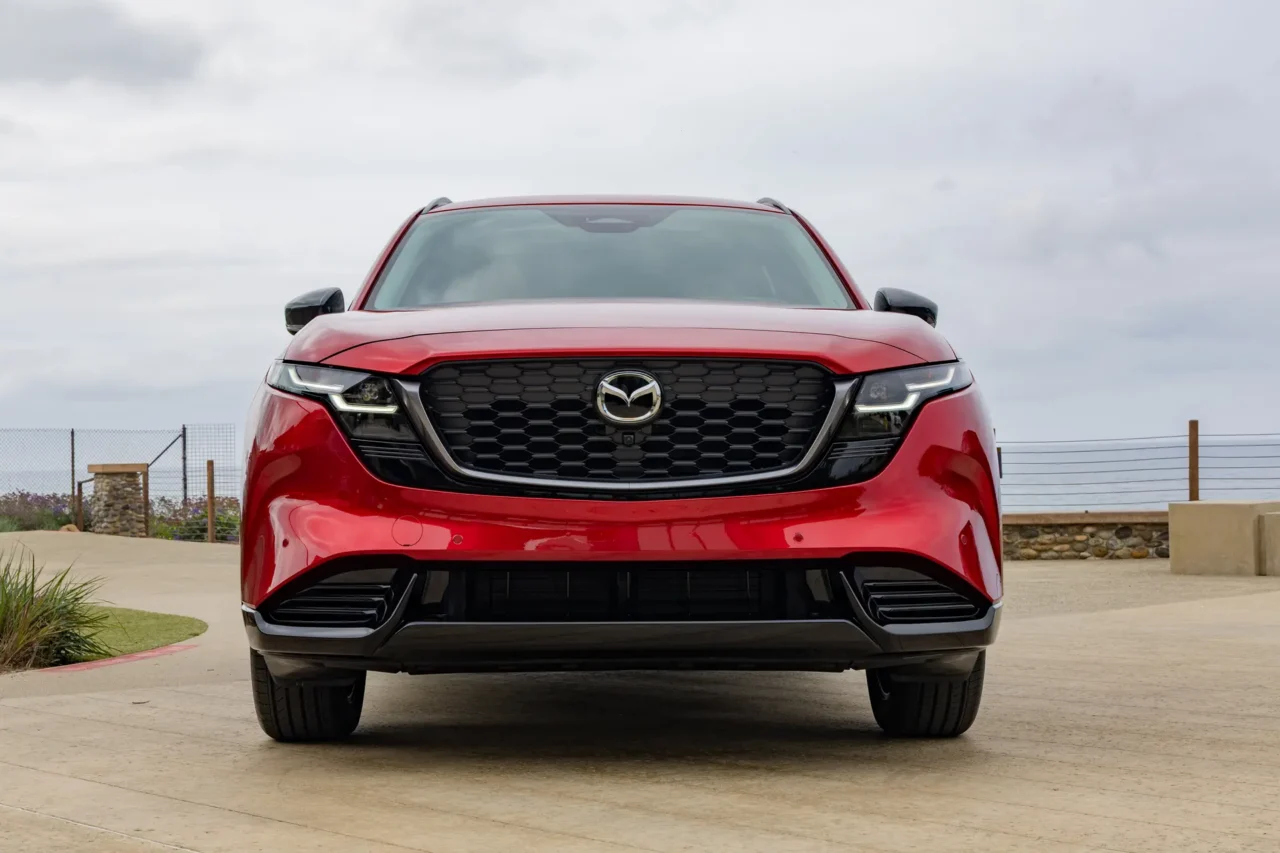
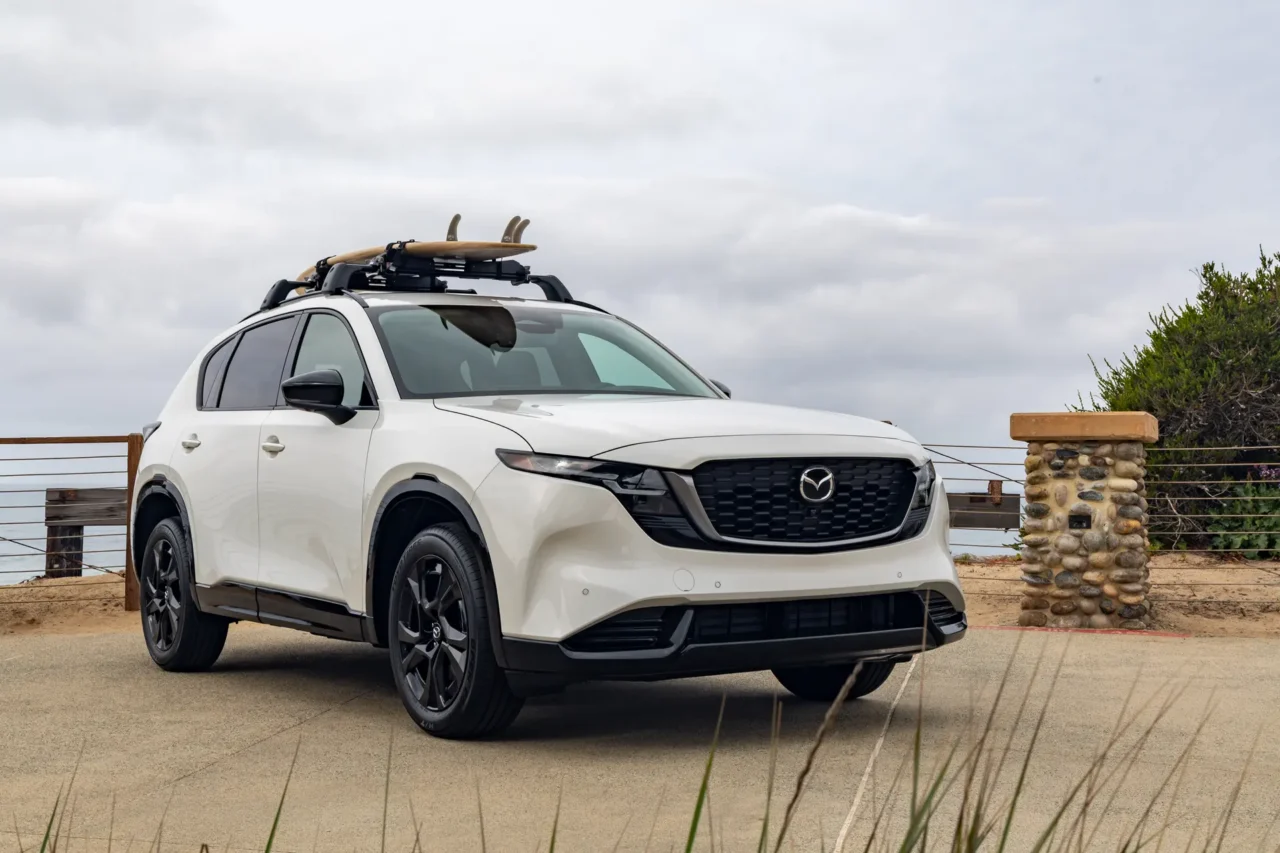
Mazda’s most popular SUV gets a styling glow-up as well as a major tech update.
In the video below, Tommy goes through the finer points of the CX-5 as well as three of its main rivals. One point immediately emerged as we checked out these four models, though: On price, all of these cars benchmark remarkably close to each other. While the new Mazda CX-5 starts at $29,990 ($31,485 including destination), the Toyota RAV4 starts at $31,900 ($33,350 w/ destination), and the Honda CR-V starts off at $30,920 ($32,370 w/ destination). As for the Hyundai Tucson, you’ll pay at least $29,450 ($31,050 w/ destination). So, at the lower end at least, the 2026 Mazda CX-5 makes a strong value case, particularly among its rival Japanese brands.
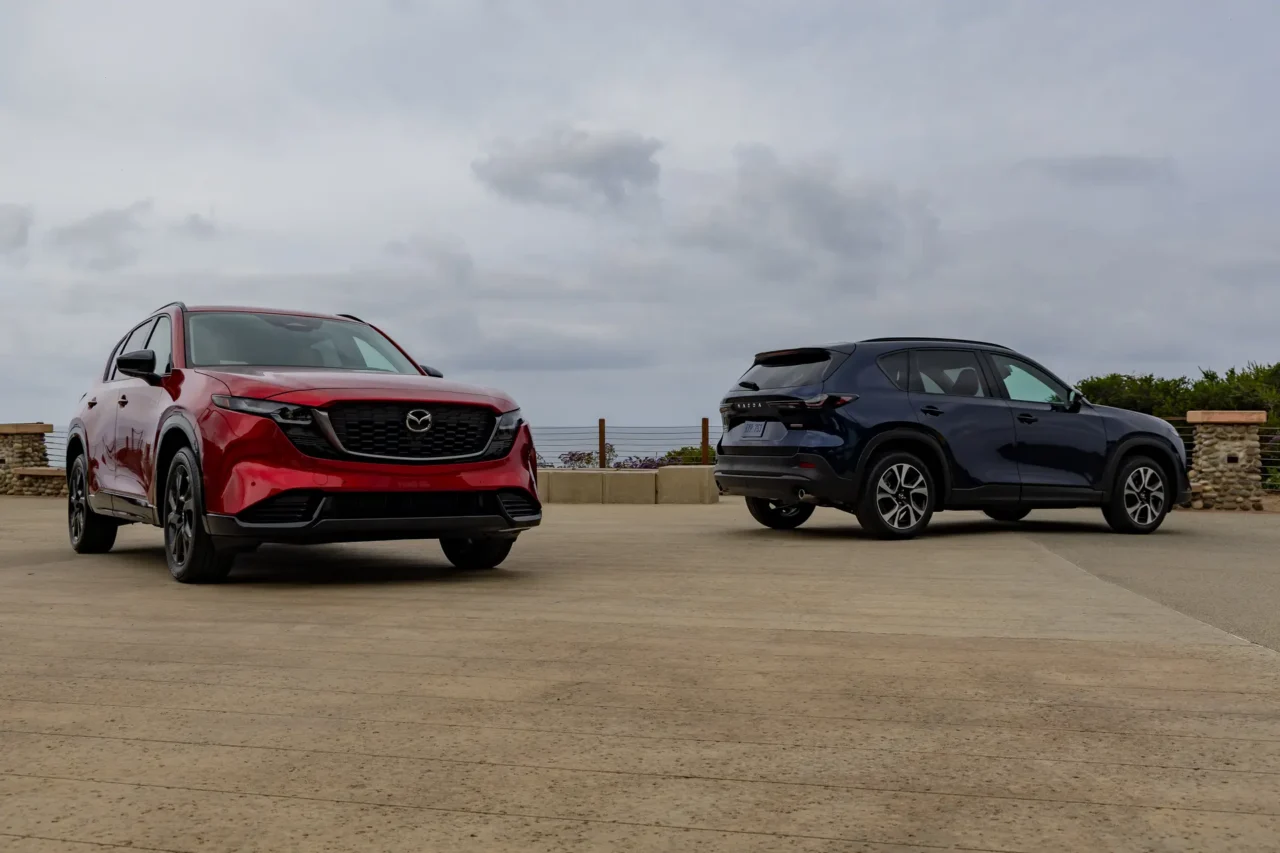
It’s not just about hitting a price point, though. The second-generation CX-5 served as Mazda’s moneymaker for nearly a decade, so it behooves the company to make some compelling changes to keep it competitive. To that end, there’s new styling, particularly up front with a redesigned grille, sleeker headlights that integrate into that grille and a trim element connecting the headlights together. Around back, the look more closely matches the larger CX-70 and CX-90 in terms of taillights, while there’s a new “MAZDA” script across the tailgate (that also makes an appearance on the steering wheel.
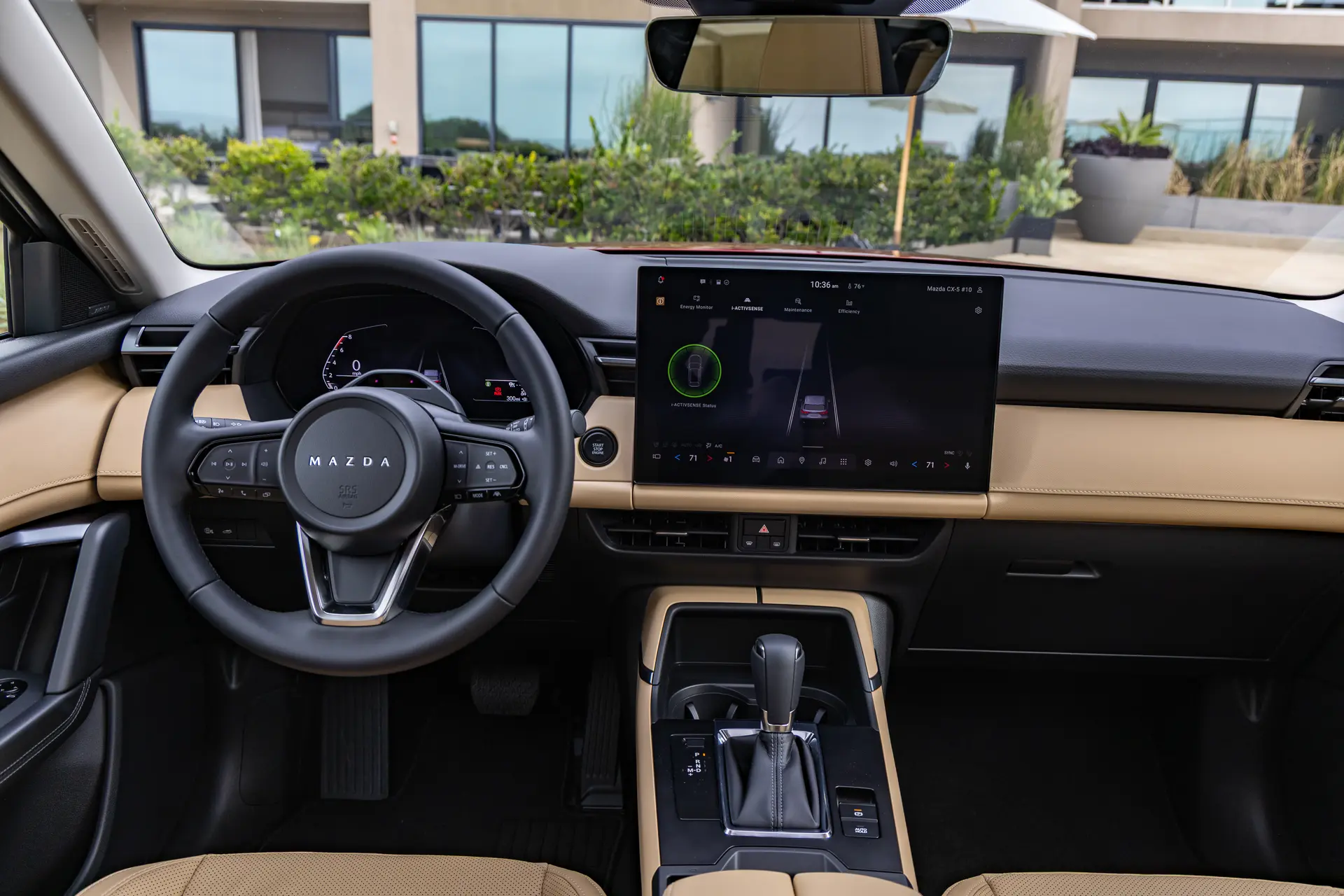
Inside, the 2026 Mazda CX-5 officially ditches the old, command-wheel-controlled infotainment system in favor of a far larger touchscreen. Lower-end models get a 12.9-inch center display, through which you directly pretty much all of the controls, while the top Premium Plus trim gets a 15.6-inch unit. The steering wheel has further been revised with the aforementioned Mazda script, as well as a host of buttons laid out across the pads on each spoke, so the driver can access everything from media to cruise control and even the drive modes for the “Mi-Drive” system without taking their hands off the wheel.
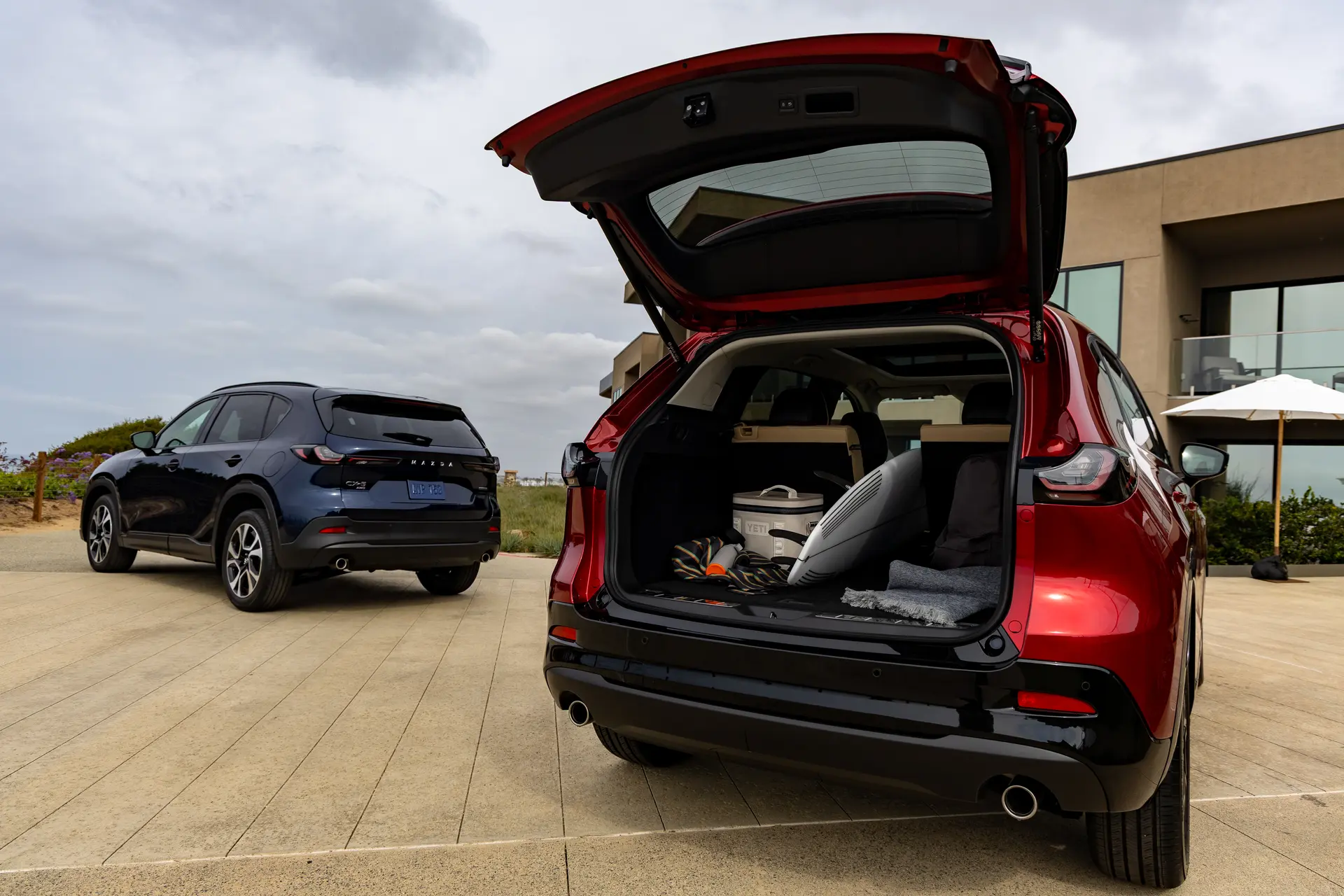
Against the Toyota RAV4, Honda CR-V and Hyundai Tucson, the 2026 Mazda CX-5 gets physically larger than the previous generation. Overall, this new car is 4.5 inches longer, allowing second-row passengers 2.3 inches of additional knee clearance and expanding cargo volume up to 33.7 cubic feet with the back row in place (or 66.5 cubic feet with the seats folded). That cargo volume still comes up a bit short of the Toyota RAV4 (37.8/70.4 cu. ft), Honda CR-V (39.3/70.4 cu. ft.) and the Hyundai Tuscon (38.7/74.8 cu. ft. SAE volume). The extra space is still better at least, so it’s not quite as cramped as the old model.
Check out more on each of the three crossovers in the video below: