| The Good | The Bad |
| ✓ Evolved, yet elegant styling | ☓ No more turbo means not much gusto (for now) |
| ✓ More space | ☓ A touchscreen-heavy setup…as automakers are pivoting back toward buttons |
| ✓ Comfortable, well-sorted ride | ☓ Hybrid model isn’t coming until 2027 |
| ✓ Still has the solid dynamics of the old CX-5 | ☓ Lower towing capacity vs. old model |
Overview: Mazda’s new CX-5 takes its best-seller in a new direction, for the most part.
Even as the automaker revamped and expanded its lineup with the CX-50, CX-90 and CX-70, the second-generation Mazda CX-5 remained its most popular vehicle to this day. It’s still one of the best crossovers in its class to drive, but it’s time for some major updates to keep this model competitive against the likes of the brand-new Toyota RAV4, Honda CR-V and a sea of rivals from every manufacturer. The third-generation, 2026 Mazda CX-5 promises a bolder design, improved tech and a more versatile proposition than the outgoing model, all without breaking the bank against the SUVs folks are most likely to cross-shop against the company’s latest offering.
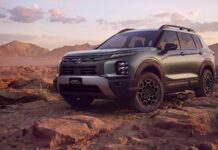
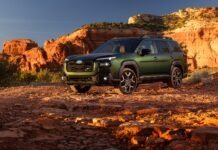
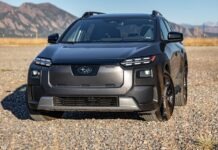
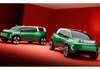
From updated Kodo design to a car that is physically larger than the outgoing generation, the new CX-5 broadly brings a different look and better practicality to the equation. That latter part is important, since it’s an area where Mazda, for all its focus on driving dynamics, has struggled to match the competition. This third-gen version rides on a 4.5-inch longer wheelbase, offering up better second row legroom and better cargo volume (with a wider opening to load cargo, for that matter) than its predecessor. Design-wise, this is an evolutionary take on a style that’s worked well for the brand over the years, though the front clip gets a classier sort of look, while the tailgate and the steering wheel get fancier looking “MAZDA” script, leaving the classic winged M just on the front grille.
On the technology front, the 2026 Mazda CX5’s claim to fame is a new touch-centric infotainment setup. They’re ditching the old version of MazdaConnect that focused on a rotary command dial which was…divisive, at best. Now, you have Google Built-in apps and a touchscreen to control, well, practically everything inside the car. Few hard touch points remain, with most controls either shifted into the display (up to 15.6 inches in diagonal size) or onto the steering wheel.
Mazda does promise suspension updates over the old generation, while the longer wheelbase arguably improves stability in day-to-day driving or making the best of its fully independent setup (to the CX-30/50’s torsion beam rear end arrangement). The powertrain is one area the CX-5 hasn’t changed (yet): This third-generation model packs the tried-and-true — or just plain old, depending on your point of view — 2.5-liter SkyActiv-G four-cylinder engine. You still get 187 horsepower and 186 lb-ft of torque and all-wheel drive, and it still mates up to a 6-speed automatic transmission. A hybrid CX-5 is coming, but Mazda didn’t invite the TFL team and a host of other journalists to test that model just yet. So, for now, this is your sole option if you want a CX-5 at all.
Like its other SUVs, the 2026 Mazda CX-5 is shifting into the brand’s new trim structure. So gone are models like “Grand Touring” and “Signature”, but you get the same sort of arrangement if you’re shopping, say, a CX-50. The CX-5 2.5 S starts off the range at $31,395 (including $1,495 destination), with the trim stack then moving through Select, Preferred and Premium before hitting the top-end Premium Plus, for $41,395.


Coming to grips with the 2026 Mazda CX-5
At 184.6 inches, the 2026 Mazda CX-5 measures out 4.5 inches longer in overall length, so it’s closer than ever to the still-slightly-larger CX-50. Mazda is aiming for a different kind of vibe with this model, however, as it’s more of the urbanite to the CX-50’s more rugged demeanor (particularly with the latter’s Meridian Edition). Rear seat legroom improves substantially, while the 40/20/40 split-folding seats accommodate various kinds of cargo — including surfboards, as the company was keen to show with its static units — while still fitting the most passengers possible in the greater amount of space.

The real headline change is the interior, though. Mazda is still sticking with premium-feeling materials, so none of the classier feel compared to the competition has been lost between generations. That said, there’s a new steering wheel that incorporates a wide array of controls at the driver’s fingertips. Depending on how you feel about big pads with umpteen switches on steering wheels, this can be a plus or a minus, as it also includes your drive modes. You still get the media controls and driver assistance switches, of course, but Mazda’s designers have funneled a bunch of major controls toward the driver, rather than keeping center-mounted switches below the screen or on the center console.
Then there’s the screen. It’s larger than before, obviously, though the lower trims will get a slightly smaller 12.9-inch unit. Only the top-end Premium Plus gets the huge 15.6-inch affair, which again, can be a plus or a minus. On the up side, the screen offers up sharp, responsive icons and information, particularly with Google’s baked in apps (you can still use Apple CarPlay and Android Auto, if you want). On the down side, the smaller screen also gets smaller icons, so manipulating the touch controls can be a bit tricky. The passenger can also control the volume through the screen on their side, but there are only three physical buttons anywhere near the screen: the front and rear defrosts and the hazard lights.
Since the system runs on Google’s software, we’re also getting help from the company’s Gemini AI assistant, however excited you are about that prospect. For the most part, outside core vehicle controls, you can simply tell the system what to do. Adjusting the temperature, turning on the heated seats, fiddling with the volume and changing the station is all within a voice command.
Mazda added in new safety features, both active and passive, in pursuit of keeping its SUV at the front of the pack with IIHS Top Safety Pick ratings. Not only do you get 10 airbags, but the rear outboard passengers now get the same seltbelt pretensioners that front passengers have enjoyed for years, as the IIHS toughens its crashworthiness criteria for rear occupants. the i-ActivSense suite also brings in automatic braking (front and rear), smart brake support when moving, adaptive cruise control, lane-keep assist, blind-spot monitoring and traffic sign recognition. All of those features are standard, with only items like the 360-degree camera still relegated to the upper trims.

Then there’s the bit that hasn’t changed…the engine.
If you’re shopping the 2026 Mazda CX-5 and pull up a spec sheet, you’ll immediately notice something familiar. The 2.5-liter SkyActiv-G gas engine is still kicking here, in all its aforementioned 187 horsepower and 186 lb-ft of torque. The old CX-5 managed a 0-60 run in about 8 seconds with this powertrain, which isn’t terrible, but from behind the wheel…it sadly lacks oomph, just like the old one did. One difference with the old CX-5, of course, is that you could spec a 256-horsepower turbocharged version of that four-pot, and that’s not an option here.
There are a couple reasons for the CX-5 Turbo’s absence. Not many people actually bought one with their own money in the first place (because it came with the most expensive trims), and a hybrid version is on the way in due time. We don’t have technical specs there, but that may redress the power issue, and it will certainly be far more fuel efficient to go that route anyway. As it stands, the gas-only model we’re looking at here packs a similar 24 City / 30 Highway / 26 Combined mpg. It’s down a little bit since this model is physically larger than the old one, but that’s still at least decent for the class.
Fortunately, while the more or less decade-old engine and transmission setup carry over relatively the same, the 2026 Mazda CX-5 has lost none of its handling prowess. In fact, that’s only gotten better, as this version still retains a fun-to-drive aspect (as long as you’re not looking for straight-line acceleration) while having an even more compliant and comfortable ride. It’s still a great car to toss around a bit, while it nails the day-to-day repose of the more premium SUV brands Mazda is gunning for.
Not that many folks would necessarily tow with the old CX-5 thanks to its 2,000-pound capacity, but the 2026 model is lower still, at just 1,500 pounds across the range.

Verdict: The 2026 Mazda CX-5 is still a buy for me, unless you’re looking to upgrade (here’s why).
Fundamentally, Mazda has been careful with its bestseller to fix pain points from the old car, while still offering enough new to keep it in contention with the plethora of rivals it has to take on. The pricing is up by around $1,000 at the base end and up to $3,000 at the Premium Plus level, though the company does offer all-wheel drive across its entire SUV lineup to boost the value prospect a bit.
Here’s the thing: If you already own a Mazda CX-5 and are looking to upgrade, is it worth the switch? Based on having the same powertrain and feeling pretty similar to the old car (some refinements notwithstanding), I’d advise waiting a bit to see what the hybrid model is about. Or, if you like the extra space, the looks and want some more tech, then by all means. This is a solid evolution of the past generation…I’m just not sure I’d buy in right now if I owned a second-gen CX-5.
Then there’s the screen issue. It’s something that tends to split opinions, and Tommy and I both feel that Mazda is jumping into this big-screen game just as other players are facing the backlash and reintroducing some buttons back into the equation. Folks shouted at Honda to at least bring back a freaking volume knob, and lo and behold, it’s back. Will new buyers or Mazda faithful make the jump toward this new setup? We’ll have to wait and see, but if you passionately can’t stand screen-heavy setups, it may be worth sticking with a recent second-gen model. I know that likely comes off as “damned if you do, damned if you don’t” from Mazda’s perspective, but some folks obviously just prefer a more “analog” experience — at least as much of one as we can get anymore.