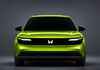
After stopping ID.4 production, Volkswagen said a replacement would emerge soon…and now it’s here!
To say Volkswagen has faced an uphill, extremely rocky battle rolling out its fully electric vehicles in America is a titanic understatement. Sure, the ID.4 saw modest success in the grand scheme of things. Over the six years it’s been available on the market to the recent inventory sell-down as VW scrapped building it in Chattanooga, Tennessee, dealers managed to rack up north of 100,000 sales. Nevertheless, that isn’t a runaway hit, and alongside the glacially performing ID.Buzz — which just got delayed for its return to the US, by the way — the company needs a winner. It needs the new ID.Tiguan.

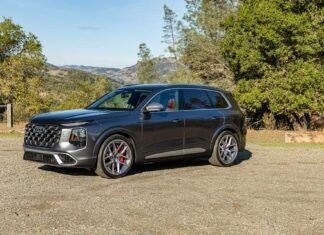
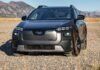
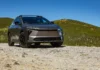
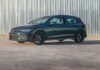
Yep, rather than try to beat the dead horse that is the ID.4 (a naming strategy that, most folks will admit, has not worked), the 2027 Volkswagen ID.Tiguan brings the next-generation electric SUV closer to home for would-be buyers. At least, that is VW’s ambition, as a total redesign with an established name is “intended to provide customer with clear orientation and stands as a strong product brand for a clearly defined vehicle concept.” Because it’s been a lot more difficult for salesman to tell folks looking into an EV what the heck an ID.4 was, or why it looked like it did.
The all-new Volkswagen ID.Tiguan will succeed both the ID.4 and the ID.5 moving forward.
To be clear, this will not replace the standard Tiguan, as that car will still be available in its current gas-powered form and eventually as a hybrid, when VW gets around to launching that version here in the next couple years as a 2028 model. This will just add another option to the sales mix, as the German automaker aims to claw back market share — and improve its financial outlook in the wake of plant closures, massive layoffs and slashing product lineups — when it arrives.
Speaking of when to expect the 2027 Volkswagen ID.Tiguan, the answer is: Not long, but longer than Europe. The global premiere is just around the corner in October, right around the Paris Motor Show, followed by its European launch early next year. The US market will follow, though Volkswagen did not give an exact time frame on when Americans will see it at their local dealers.
We also don’t know much in the way of specs. We do know the ID.Tiguan rides on an updated version of VW’s MEB platform (dubbed MEB+). Odds are, we’ll also see newer versions of the 58-kWh and 77-kWh battery packs that underpin the ID.4. There could potentially be some electric motor and charging speed improvements in the works, while VW would also benefit from improving the car’s range.
Finally, there’s the question of dollars and cents.
The nearly defunct ID.4 starts off at $46,570 for the base Pro rising to $59,585 for a loaded AWD Pro S Plus. Volkswagen has saddled its EV with the same price creep that has impacted many of its rivals over the past few years. With newer players like the Rivian R2, Kia EV3 and well-established players like the Tesla Model Y on the market, there’s no way for VW to get around an uncomfortable truth: Those are not competitive price points. While we’re far from seeing actual MSRPs hit our side of the pond, the automaker may need to price the ID.Tiguan in the $40,000-$50,000 range (across most of the trim stack, at least) to give it a fighting chance.
That said, if you want a relative bargain, Volkswagen is officially discounting the pants off remaining ID.4s right now. If you snag a 2026 you can expect a $6,000 customer cash bonus, while you can get $12,500 off a 2025…if you can find one.