Home Blog Page 7

VW and Audi Had a Rough First Quarter for New Car Sales…But Not Where You’d Expect

(Images: Audi)

With a heavy EV mix and sluggish SUV sales, Audi didn’t have the best time in terms of sales these past three months. VW also had a rough go of it.

The first three months of 2026 were a mixed bag depending on which OEM you’re looking at, but things aren’t looking too great for Volkswagen Group. That includes the VW brand itself (with a couple notable exceptions), as well as the Audi brand. Porsche, too, lost some serious ground with its iconic 911 sports coupe, but it’s not all bad for Stuttgart, and we’ll get into those details here.

While several OEMs report sales right when the quarter concludes, it took a moment to get official figures out of Volkswagen and its adjacent brands. Overall, VW itself saw a 16.1% drop over where it was at this point last year, while Audi sales slid by an objectively painful 30%.

Audi’s SUV sales dropped from Q1 2025…but its sedans did not.

As it published official new car and CPO sales figures, Audi noted “dynamic conditions and headwinds” as well as overall market decline in the first quarter. If you’re thinking, “gee, I wonder if the ‘t’ word came up”, you bet it did: fluctuating automotive tariffs that initially took hold around this time last year (taking hold throughout 2025 and lingering into this year) are a common refrain among OEMs reporting bad sales news this past quarter.

Popular SUV models like the Q3, Q5 and Q7 are down by 20 to 30%, to kick things off. The Q3 (4,256 units sold, down 20%) just landed so the usual production ramp-up is a pain point there. The Q5 also dropped by 26% to 10,100 sales, however, while the Q7 slid 30% to 3,554 units. The more niche Q8, which is currently the flagship in the Audi lineup until the new Q9 arrives, also dropped by 25% to 2,285 sales in the first three months of 2026.

EVs are another major pain point, as they were for most OEMs these past few months. Sales of the Q6 e-tron, for example, dropped by 90% to just 309 units between January and March. Audi made a decision similar to what VW is reportedly doing with the ID.Buzz: It’s skipping the 2026 model year altogether and bringing the Q6 back into the fold for 2027. What we’re seeing here then, is a slowdown as interested buyers grab the last of available dealer inventory before it supposedly starts back up later.

The smaller Q4 e-tron saw a 93% drop to just 90 sales in Q1 2026. Officially, Audi hasn’t discontinued the Q4 and it is still available as a 2026 model on its configurator page. Nevertheless, that is a dramatic collapse in sales that suggests folks are going toward the competition for their next EVs, if they’re buying EVs at all.

Interestingly, where you would normally expect a drop in sales, Audi actually reported some gains. In fact, the only Audi models to pick up some ground are the new A5 (which saw a 6% increase to 4,372 units) and the A6 (which picked up 9%, to 2,026 units). The automaker effectively replaced the A4 lineup with its new A5 as a compact sedan, while it made the decision to launch the A6 in both gas and electric variants. Considering the A6 e-tron sold 164 units in the first three months of 2026…that was a good call.

(Image: TFL Studios)

Volkswagen also broadly saw its sales decline, with a couple exceptions.

Across the board, VW itself saw a 16.1% drop in total sales year-over-year from the first three months of 2025. At first glance, you can spot the expected culprits: the ID.4 and ID.Buzz EVs. It’s likely company executives saw the writing on the wall prior to its decision to discontinue ID.4 production in the U.S. — sowing doubt the model would return. Volkswagen says a replacement for the ID.4 will arrive in due time, but if the demand isn’t there…well, you can fill in the blanks. It’s a similar story with the ID.Buzz, so we’ll have to wait and see.

It’s not just EVs, however. The small Taos SUV also took a beating in the sales charts, dropping by 40.8% to 9,995 units between January 1 – March 31. The Jetta sedan saw a similar trouncing, dropping by 34.9% to 11,565 sales. And it continues with the GTI, which dropped 21.6% to 1,484 sales. It’s worth noting at this point that all three models are built at the company’s Puebla, Mexico plant, so tariffs could have played a role in the company’s performance here…but there is one huge exception.

That is the long-wheelbase Volkswagen Tiguan, which saw its sales increase by a whopping 55.2% to 29,928 units. While the company was relatively quiet about the rest of its sales release (in fairness, there’s not much to celebrate), the Tiguan is the one car that really saved VW’s bacon in early 2026. At the very least, its performance evokes the classic “things could have been a lot worse” comment.

The only other car that gained ground in VW’s latest sales report is heartening, as well: the Golf R. Even though it’s never been a huge volume seller, the R’s 4.7% increase to 806 units is better than seeing its high-end hot hatch trending in the other direction. What’s also good news for enthusiasts is the company’s continued dedication to the models. You may not be able to get either with a manual transmission anymore (RIP), but Dr. Kjell Gruner, president and CEO of Volkswagen Group of America, emphatically said its hot hatches are sticking around, calling them the “heartbeat” of the brand.

Volkswagen’s other major SUV, the Atlas, also continues to sell decently well. While it did drop by 3.2% in Q1 2026, it still sold 16,361 units. What’s more, the company is allocating more production to the Atlas at its Chattanooga plant, after booting the slow-selling ID.4 to make the Atlas it’s only output from that plant, at least for now.

Ask Nathan: Any Word on the Small Chevrolet Pickup and I’m Scared to Pull the Trigger on a Buick Envista?

In this week’s Ask Nathan:

  • Are there still plans to build a small Chevrolet pickup truck?
  • I’m hesitant to buy the Buick Envista?

The first question is from a viewer who wants to know if the old rumors of a small Chevrolet pickup truck (one that challenges the Ford Maverick) are still valid.

This is the Chevrolet Montana, which is built for other markets. (Image: GM)

Q: RE: I still want a small Chevrolet pickup truck, but…

Nathan! Loving the fun Facebook and Insta videos you’re putting out. Hilarious! I have a car or truck question for you. Do you have any information about the small Chevrolet pickup that we were supposed to get? I saw lots of stuff about it a few years ago. Now there’s nothing. I still want a small Chevrolet pickup truck, but it looks like they might not make one. I wish I had some news.

Please let me know!

— 1040ssess

A: Hi there.

Let me put this out there first: Ford Maverick sales have dropped over 10-percent in the first quarter of 2026. It still sells lot hotcakes overall, but the momentum of 2025 has eased. I mention this, and the fact that the Hyundai Santa Cruz is going away as possible reasons GM might not press the issue. In fact: GM/Chevrolet have never announced a competitor to battle the Ford Maverick.

That’s a shame.

With that being said, Hyundai/Kia, Nissan and (possibly) Toyota have announced new small trucks, SUVs and more. They all see real potential in the manufacture of a modern pickup truck, among other things. This is good news, as GM might take a renewed interest in the small truck market. It’s hard to tell with GM as they are going through a bit of turmoil, and finding answers is a pain.

A few years back, they supposedly showed dealers a concept or two. One was even reported to be a tiny two-door EV pickup (think: Slate), but after that – crickets. I think that GM is having a hard time pivoting from the overblown electrification push to hybrid tech, which is what many of their consumers are eyeballing.

There’s another side to all of this, sources say that GM is serious about building a sub $20,000 pickup on a unibody chassis. Smaller their their non-U.S. market Chevy Montana. Here’s the rumor, (with no confirmation): It is expected that the new small truck will share a platform with existing compact crossover models, such as the Chevrolet Trax or Buick Envista, likely utilizing a turbocharged 1.2L or 2.7L engine. – Google

So, there you go. There could be something to these rumors, but with GM being so quiet, it’s hard to get behind the hype.

I hope they do build something!

— N


The last question comes from a first-time new car buyer who’s hesitant about buying a Buick.

Q: Via Facebook:

Nathan Adlen Journalist

Hi Nathan and the rest of the FL family. I write to you as a former fan and a longtime subscriber. Yes, I am a former fan because I quit YouTube and other social media entirely. But I remember how much fun I had watching and reading your reviews. Now it’s my turn to present you with a quandary: should I buy the 2025 Buick Envista?

There are a few ‘new’ 2025 models on this dealership’s lot in Dallas. I have never owned a new car and I’m a little nervous about getting one. Reliability is one thing I worry about and I’m not sure about its quality. My 2018 Honda Civic has been mostly trouble free and a solid car for me. Maybe I thought it was time for something a little nicer that is modern. And I can get a great deal with an option for an extended warranty.

Can you please advise?

– Susanne. R

A: Hi Susanne!

Honestly, the Buick Envista, and its brother, the Chevrolet Trax are some of my favorite vehicles on the market. They represent excellent entry-level value, yet they are surprisingly well equipped. The Buick Envista is well laid out, comfortable and it offers utility mixed in with a hint of luxury. I’ve recommended it to friends, family and fans several times.

Recently, J.D. Power rated the Envista based on several criteria, including reliability. It scored an 83 our of a possible 100. That puts it in the top 10 ranking, and it bodes well for buyers. Now that it’s been on the road for a few years, the Envista has had time to show that it can be reliable. Actually, there were very few complaints about the engine. This may strike many as unusual as naysayers predicted the 3-cylinder turbo would fall apart. There have been problems with the UX, but these glitches have been (mostly) ironed out.

I have a friend with a 2025 Preferred and his sister has the Avenir. Both seem to be pleased with their Buicks two years after they purchased them. I suppose that says something. Additionally, they both have an extended plan and a prepaid maintenance plan. Be diligent about servicing your vehicle, and make sure you know what service plans are available.

Best of luck!

– N

Jeep Confirms the Grand Cherokee Trailhawk Will Indeed Return This Year (Just Not As a PHEV)

New Jeep Grand Cherokee Trailhawk
(Images: Stellantis | Jeep)

After scrapping its 4xe models, there’s been little word on a new Jeep Grand Cherokee Trailhawk until now.
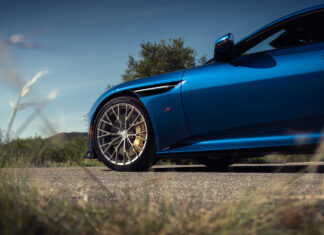
As Stellantis recalibrates how it’s going to approach the electrification question, the 2026 Jeep Grand Cherokee has been in a bit of an awkward position. See, the off-road Trailhawk version was going to exclusively be a plug-in hybrid ‘4xe’ model, until Jeep decided to can all its existing PHEV offerings. That took the revamped Trailhawk with it — at least temporarily. Now, the automaker confirmed a new Trailhawk is indeed coming this year, but obviously with a change in powertrain.

The company made an official statement to that effect: “Today, we are excited to confirm that the Jeep Grand Cherokee Trailhawk is coming later this year.” It also offered a fresh look at the new Trailhawk, noting its Trail Rated capability that will arrive “as the brand continues its new product blitz with valued Jeep content, capability, and more, as a reflection of the brand’s purpose-built identity.”

If you zoom out a bit, getting a new Grand Cherokee Trailhawk was pretty much a foregone conclusion. Its absence leaves a serious void in the brand’s dirt-worthy offerings, since not everyone necessarily wants to just jump into a Wrangler. The big question here, however, is exactly what will power this new model, now that the 4xe is out of the picture.

Stellantis could go a couple different directions here. The rest of the 2026 Jeep Grand Cherokee lineup debuted a new 2.0-liter Hurricane inline-four, putting out 324 horsepower and 332 lb-ft of torque. That’s a decent amount of grunt in its own right, but…that’s not exactly what enthusiasts are clamoring for. And you know where I’m going with this.

Much like four letters encapsulate the off-road brand we’ve all loved for the past 85 years, there are another that could define the most capable version of the Grand Cherokee: H-E-M-I. It’s not even farfetched, considering the previous-generation GC Trailhawk did pack a 5.7-liter V8, at least as an option. That bumped up your available power to 360 horsepower and 390 lb-ft, which would still be a decent uplift, even over the new Hurricane.

Right now, the only V8 Jeep is actively running in its lineup is the big Hemi, with the Wrangler Rubicon/Moab 392. We’ll have to wait and see just what Jeep does for the Grand Cherokee, but it’s been keen these past couple years to once again pack a Hemi into its more iconic models, at least. It would be a far more heroic return than just offering the Trailhawk with your run-of-the-mill Pentastar V6…but we’ll have to wait and see what comes our way in the next few months. Odds are, when we do see it, the revamped Grand Cherokee Trailhawk will now launch as a 2027 model.

Volkswagen Shuts Down American ID.4 Production to Focus on the New Atlas

(Images: Volkswagen)

Volkswagen Group of America (VGoA) announced new plans for its Chattanooga, Tennessee production plant.

Since July 2022, Volkswagen’s Tennessee plant has been churning out both the midsize Atlas SUV as well as its all-electric SUV offering, the ID.4. Now, though, the automaker announced Thursday it plans to change strategy, dropping American production of the ID.4 starting in mid-April. From next week onward, it aims to “shift its primary focus to higher-volume models that support sustained growth in North America”, like the second-generation Atlas.

Despite its decision to drop the ID.4, this isn’t necessarily the end of the EV’s story. Part of the company’s statement notes a future version of the ID.4 is planned for the North American market. So, VW’s electric SUV isn’t going away entirely, but the next-generation version may not be assembled in America, like the current model you can currently buy here.

“Volkswagen is exploring pathways to introduce potential new product intended specifically to meet U.S. consumer needs and in line with the new focus on high-volume vehicles. Details will be announced as decisions are made.”

VGoA emphasized its commitment to the plant and its workers throughout the statement, in at least an indirect nod toward the plant’s recent unionization in February. As part of the shift in production, the company says workers currently supporting ID.4 production will be transferred to other positions in the plant, based on seniority. A “special early retirement program for eligible employees” will also go into effect, so while it won’t directly be laying off employees, it may reduce the overall workforce through early retirement as the Atlas becomes Chattanooga’s sole product (again, at least for now).

2027 Toyota Land Cruiser Models Get Inked, And You Can Get Yours with a Raised Air Intake

(Images: Toyota)

A few noteworthy tweaks make their way to the 2027 Toyota Land Cruiser lineup.

This spring, the 2027 Toyota Land Cruiser will roll into dealerships all over the U.S. Fundamentally, the brand’s iconic off-road SUV hasn’t changed much, but it is getting some tweaks to its available features as well as one piece of off-road gear from the 4Runner and Tacoma. Now, the Land Cruiser gets the option of a raised air intake, a feature that’s been a hallmark of the TRD Pro as well as the recently added Trailhunter models.

The “high-mount air intake”, as Toyota refers to it on the configurator, is a $980 option available on either the base 1958 as well as the top-end Land Cruiser trim. Beyond that update, the Land Cruiser’s black exterior color now gets an actual name, “Inked”, and you can now get heated and ventilated second-row seats on the upper LC trim through the $4,905 Premium Package.

In terms of its overall pricing, the 2027 Toyota Land Cruiser (fortunately) isn’t going up much over 2026. The base 1958 model’s MSRP now stands at $59,375 including destination, while the higher Land Cruiser comes to $65,450, including Toyota’s $1,495 destination fee. That’s up $280 from last year, so while it is an increase, it’s not that bad against what we’ve seen from some other recent price hikes.

As before, the one and only powertrain option for the 2027 Land Cruiser is a 2.4-liter four-cylinder hybrid, packing 326 horsepower and 465 lb-ft of torque. An 8-speed automatic and full-time four-wheel drive come as part of the standard package, as does a locking center and rear differential.

Generally speaking, are the options going to split more folks toward the Land Cruiser over the 4Runner? We’ll have to see, but LC sales are down by about half so far this year after the initial launch bump, while the 4Runner is getting into its stride (sales of that model picked up by nearly 300% after Toyota ramped up production this time last year).

Hyundai Resumes Selling Certain 2026 Palisade SUVs After Fixing Seat Defect Resulting in Child’s Death

2026 Hyundai Palisade
(Images: Hyundai)

After a two-year-old’s death and subsequent stop-sale and recall, higher-end Hyundai Palisade models with power-folding seats are once again available.

In March, Hyundai released a statement and issued a stop-sale concerning certain versions of the latest Palisade after a two-year-old girl was fatally injured by the car’s power-folding seats. The automaker subsequently issued a recall to address the issue, and after finalizing a fix related to both second- and third-row seats, the whole Palisade lineup is once again on sale (per Reuters).

The recall addresses a few key concerns about how the power-folding seats on Palisade Limited and Calligraphy trims operate. New software with updated occupant and object detection is a key part of the remedy. The single-touch fold function, which shipped with the upper-trim Palisades, is now disabled: Users will have to press and hold the seat-folding button to actually fold down the rear seats. The tailgate also needs to be open to use the car’s seat-stow function, while owners can no longer do it from the infotainment screen.

Hyundai rolled out the fix through an over-the-air software update, and considers the changes in that update the final fix for the issue. Vehicles with an active Bluelink subscription can get the latest update installed to their car without needing to go into the dealer. However, customers without Bluelink can go into the dealer to have the update done, free of charge. Dealers will also need to update vehicles in their inventory before selling them to the general public, but affected Palisades will be available for sale once that’s done.

In total, this recall campaign (Hyundai recall 296, NHTSA recall 26V-160) affects 61,093 Hyundai Palisade SUVs. Again, to be clear, this only affects trims with power-folding seats, so customers who do not own a Palisade Limited or Calligraphy aren’t impacted by this recall.

GM Could Soon Revive the Chevy Camaro Alongside New Cadillac and Buick Sedans: Report

(Image: General Motors | Chevrolet)

Some more cars may soon be coming to GM’s lineup, including a revived Camaro and Buick sedan.

We’ve said it so much over the past decade or so, you can probably recite it from memory: “Sedans are dying”. You’d especially think that looking around the Big Three, as both Ford and General Motors have practically eliminated their conventional car lineups, with GM going a step further and even shelving the Camaro. The winds may be shifting a bit, though, as an Automotive News report sheds light on a new Buick sedan as well as a revived Camaro within the next couple years.

Now, we already know Cadillac is working on a next-generation sedan. It’s putting the smaller CT4 out to pasture after the 2026 model year, but a new CT5 is on the way. Then reports swirled that a new Buick sedan (something we haven’t seen since the the LaCrosse and Regal were axed in the U.S. around 2019-2020), built on the same Alpha II platform as the upcoming CT5. AutoNews‘ latest cites a major GM supplier, however, telling enthusiasts what they’ve been anxious to hear for the past couple years: A new Camaro is coming.

As you likely put together by now, all three vehicles are related. According to this unnamed source, the company will build all three cars on that new second-gen Alpha platform, and build all three cars at its Lansing Grand River plant. That facility is where GM builds the current pair of Cadillac sedans, as was the Camaro until the automaker dropped the sixth-generation model in 2024.

But when will they actually land? Well, this same source also says GM will kick off production for the CT5 and Camaro in fall 2027. The supposed Buick sedan’s details are a little more hazy, but the company has feelers out in the way of parts quotes to flesh out a potential comeback for a four-door Buick. It’s worth noting the LaCrosse never truly went away, as GM is still building the car for the Chinese market. So, there’s some potential that nameplate for the brand’s midsize sedan could make a return over here, just on the Alpha II platform instead of the VSS-F platform that underpin’s China’s LaCrosse (as well as GM’s small crossovers like the Encore GX).

What about the past Camaro rumors about it being a crossover…or electric!?

Even before the last-gen Camaro bowed out, the rumor mill’s been abuzz with the pony car’s future prospects. Keep in mind, we were also hearing about Corvette becoming its own brand and spawning a crossover at the time (and as of right now, that does not seem to be happening).

While some reports suggested the Camaro could follow a similar path or even go electric, this latest supplier revelation suggests a more conventional path, at least in the next generation. The Alpha II platform leans toward a rear-wheel drive platform, while GM’s recent investment in V8s — like the 6.7-liter LS6 in the new 2027 Corvette Grand Sport and Stingray — means a fair to even good change it could make an appearance in a new Camaro SS. This is speculation at this point, of course, but a V8 seems more likely than it has in previous years. Electrification is always possible too, though it seems a little less likely now we’d get a fully electric Camaro (at least as a direct successor to the old one).

For the moment, neither Chevrolet nor Buick is going to comment on future product, so it’s worth repeating that none of this information is official just yet.

Dodge recently opened the door for an all-wheel drive muscle car option with the new Charger Sixpack. Could we see GM take a similar tack while still offering up all the power we loved with the old one? We’ll have to wait and see, but the punchline with this report is that GM could soon revive the Camaro, and that’s good news for the next era of the three-way muscle car rivalry between Chevy, Ford and Dodge.

Nissan Affirms the Next Xterra Will Have a V6 Engine Instead of a Turbo-Four

(Image: Nissan)

If you were dreading that Nissan might follow Toyota in downsizing the next Xterra’s powertrain, don’t fret.

EcoBoost this, i-Force that, and hey, how about a Hurricane while we’re at it? Downsizing has been the status quo over the past few generations, as automakers move to curb emissions and improve fuel economy while maintaining acceptable power (at least on paper). The latest Jeep Wrangler and Ford Bronco kick off their lineups with four-pot turbo engines, and Toyota jumped on the bandwagon with the sixth-generation 4Runner. In fact, on that last one, it went all-in, as your only option is a turbo-four. But Nissan’s saying “nah”, as a company executive affirmed what a lot of enthusiasts have been hoping for as it prepares a revived Xterra SUV.

Nissan North America’s Senior VP and Chief Planning Officer Ponz Pandikuthira told the folks over at The Drive exactly that leading up to the New York International Auto Show.

Mitsubishi Montero (possibly) spied
A prototype for Nissan’s new body-on-frame SUV (as well as its prospective cousin, the Mitsubishi Montero). (Image: TFL Studios)

“They (the customers) prefer a V6, they want the V6. It’s for the driving personality of a V6 over a four. So decision number one, the ICE will be a V6, and it’ll be hybridized. So if you invest correctly in the V6, pick the right V6 that’ll deliver that.”

Pandikuthra went on to cover the torque curve, fuel efficiency and emissions of delivering a hybridized V6 powertrain. Now, the general consensus leading up to this conversation is that the next Xterra would have a V6, though the key here is to see it as a more clear-cut statement of fact. Things are always subject to change, of course, but folks sweating whether Nissan would toss in a turbo-four over sticking with a six-cylinder option can breathe a sigh of relief.

There are a few other matters to consider. First off, in the real world, Nissan seems confident it can basically give you the best of all worlds with a beefier V6 mated to an electric motor than wringing out a four-pot. The hybridization brings in better fuel economy, while a larger and naturally aspirated engine delivers a more linear power experience than introducing forced induction (or, as automakers like Volvo previously have done, adding in turbocharging, supercharging and electrification).

Nissan also has a few variations of V6 to choose from. Its VQ engine family has more or less been the backbone of its six-pot offerings for 30 years, right through until today. Right now, there are three flavors: the 3.5-liter VQ35DD in the Pathfinder, the enlarged 3.8-liter VQ38DD in the Frontier, or the twin-turbocharged VR30DDTT in the Z.

Odds are the 2028 Nissan Xterra won’t feature that last engine (although if it ever needed a Bronco Raptor/Wrangler 392 fighter…), but likely one of the existing naturally aspirated options. Perhaps the 3.8-liter mill in the Frontier since the last Xterra was closely related to the Frontier. We’ll have to wait and see, of course, but this is one launch Nissan has to get right, and the company knows it. Fortunately, it seems they are listening to feedback, so we’ll have to see how this Xterra revival pans out. The more competition in this space, the better.

H/T to The Drive and Senior Editor Caleb Jacobs for the initial story, info and quotes.

Latest Videos

Latest Reviews

Latest News

Latest Views