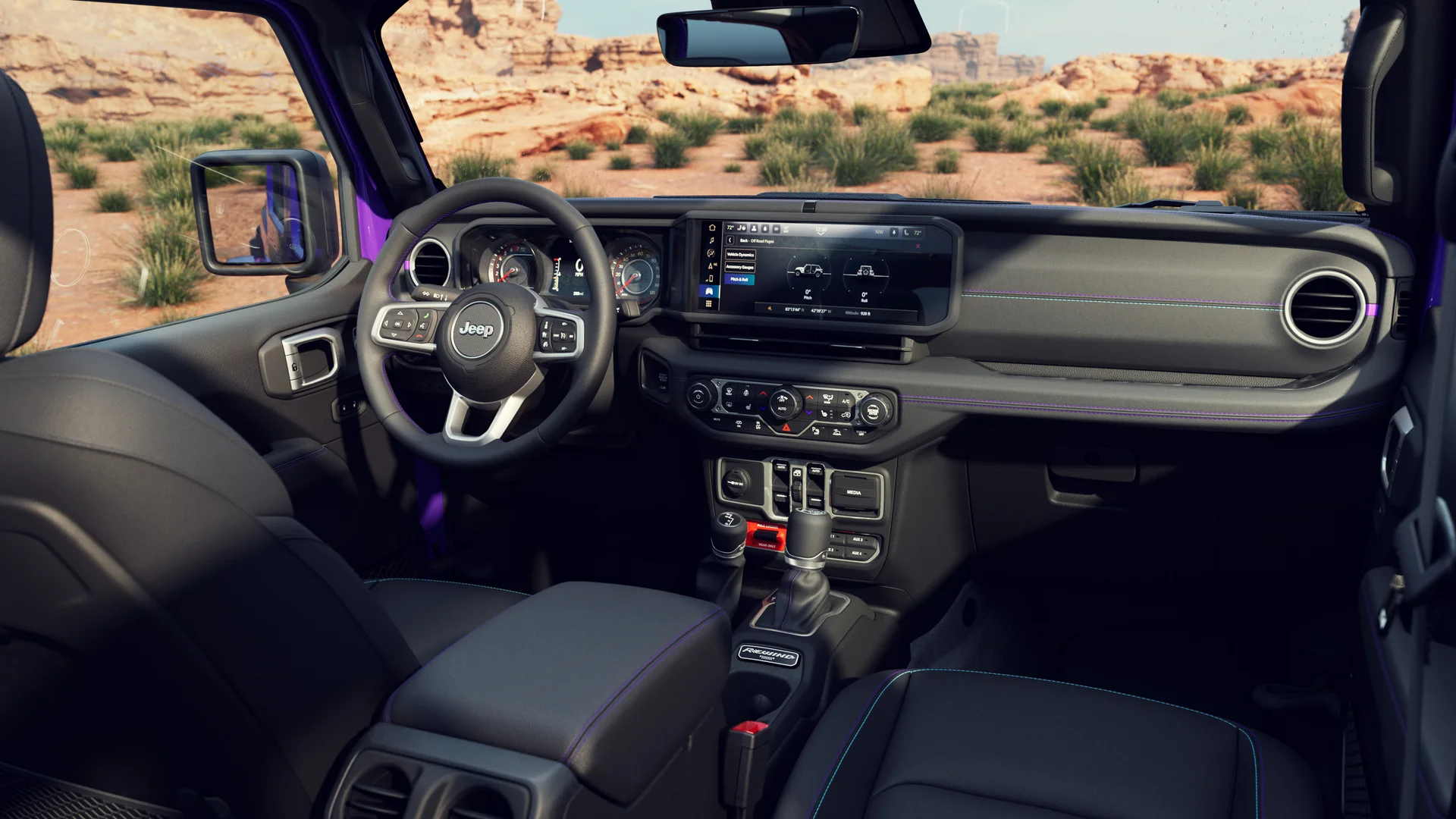
The 2026 Jeep Wrangler Rewind takes you back to the ’80s and ’90s with its styling.
After unveiling the extremely vibrant, purple Rewind concept at last year’s Easter Jeep Safari, Jeep decided to move forward with production for both the Wrangler SUV and Gladiator pickup. Now, it’s officially going on sale, with a $1,900 premium over your typical Wrangler Willys model.
The Rewind models offer up the retro-themed exterior graphics for a start, though it’s worth noting you do not have to get it in the Reign/purple color shown here. Exterior color options include Bright White, Granite Crystal, Anvil (gray), Gloss Black, Hydro Blue, Joose and Earl, so you’ll be able to get the Rewind package across pretty much every available paint option.
The package also includes gold accent wheels and tow hooks and color-matched fender flares, while you also get off-road tires and steel rock rails. Inside, the Nappa leather seats get unique 8-bit retro graphics embroidered into the seatbacks, and you get a dot-matrix-inspired shift knob cab, cupholder plaques and a swing-gate plaque, a unique spare tire cover and all-weather floor mats.
With current Gladiator Willys pricing, the 2026 Rewind will end up setting you back $49,530 including Jeep’s $1,995 destination fee, but before any other options or packages.
Order books for the 2026 Jeep Gladiator Rewind and Wrangler Rewind packages will open up next month.
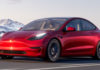
Tesla is finally wrapping up Model S and Model X production with a limited-run Signature Series.
While the Model 3/Y are Tesla’s volume sellers by a gigantic margin, two cars that really put Tesla on the map in the modern era are coming to an end. After CEO Elon Musk previously announced production for the sedan and SUV would wrap up this month, there’s some more information on exactly how the company will send the two out.
IGN senior executive editor Ryan McCaffrey shared details on the final Signature Series run of the Model S and Model X. Production will be limited to 350 units overall, with 250 allocations for the Model S and just 100 for the Model X. And Tesla isn’t treating this as an open ‘last call’ like, say, Dodge did with that last-generation Charger and Challenger. Opportunities to buy either Signature Series are by email invite only, so if Tesla didn’t reach out to you already, you won’t be able to buy one.
Tesla friends, here’s some fun news: Tesla is doing a final Signature Series run of Plaid Model S and X. 250 S, 100 X (6-seat only). Invite-only so if you didn’t get the email you can’t buy one. Celebration event (fittingly at sunset) sometime in May. I don’t have pricing but…
Nevertheless, these are technically the last Model S and Model X vehicles to roll off the production line. To that end, these models get a special Garnet Red paint, with matching door handles on the Model S. There are gold ‘T’ badges up front and a Signature badge on the rear, as well as golden Plaid badges, as these are based on the top-end Plaid models. Each car gets a white interior, a gold Plaid seat badges with gold piping, and Signature badging on the door sills. Gold puddle lights, a steering yoke, special 21-inch (Model S) or 22-inch (Model X) wheels, special interior lighting animation, the Luxe package and special Signature Edition key fobs round out the rest of the list of tweaks over your baseline Plaid models.
Of course, two things that will drive these limited-run models are price and their exclusivity. On the pricing front, follow-ups to McCaffrey’s post showed readers who were approached by Tesla to by one of these Signature Series models. The Model S and X Signature Editions, including Tesla’s $1,390 destination fee, come in at $160,810 ($159,420 before destination). The limited screenshots that were posted, at least, showed both models at the same price, although the Model S has historically been about $5,000 cheaper than the X. Either way, you’re looking at about a $30K premium over your standard Plaid models.
Not that you likely are looking at buying either car, because you can’t, unless you received an email. If you did, let us know about it and whether you’re pulling the trigger and picking up one of these Signature Edition models.
Nissan’s CEO emphasizes the importance of sports cars to the lineup, but it may be a minute.
In a statement to media directly following Nissan’s grand unveiling of its forward-looking plans including a new Rogue Hybrid, electric Juke, a new Xterra SUV and a new Skyline sedan, Nissan chief executive Ivan Espinosa said the words enthusiasts have been waiting to hear: “Yes, we are actually already working on the GT-R”.
Ever since the R35-generation GT-R rolled into the history books in August 2025 after a prodigious 18-year production run, folks have been wondering about the follow-up. Other Nissan brass, including Senior VP and Chief Planning Officer for North America Ponz Pandikuthira, noted the nameplate would not die with the R35. So, Espinosa’s latest comment may not be entirely novel, but it is reassuring to those hoping the company won’t lose sight of the sports cars folks have loved for generations, as he aims to turn Nissan around from its current troubles.
Espinosa elaborated on what that will look like in time: “Of course, the sports cars are the core of what we are as a company, so we’ve been there doing that for many generations. And there are multiple nameplates that we could leverage on. If you ask part of my brain, I would love to do that very quickly…but the other part of my brain is telling me that we have to be prudent at the moment, and go step by step. But, for sure we will see more sports cars coming into the portfolio.”
For the moment, he did not directly confirm many technical details on what the next-generation GT-R will be. That’s par for the course, considering it sounds like we’re at least a few years off from an actual R36 hitting the scene (think late-decade, with early looks around 2028 and an actual car by 2029-2030). Nevertheless, Espinosa says that “the GT-R will come, and it will come with credibility and with the credentials that it has always had, because it’s an icon of our company, but also an icon of the industry.”
Alongside the CEO, Nissan Chief Technology Officer Eiichi Akashi was also present, and is the man responsible for the company’s vehicle innovation department. That includes the next-generation GT-R, which should retain some of its notable characteristics in a new generation, while also incorporating new (to its flagship sports car, at least) technologies. The general consensus, at the moment, is that elements of the VR38 twin-turbocharged V6 will remain. In the R36, though, Pandikuthira confirmed it will be hybridized, and it will also be incorporated into the an all-new chassis.
So, while we still may have a little bit of a wait in store, enthusiasts can breathe a little sigh of relief that Godzilla will return. Hopefully we will hear much more about it in the next year or two.
It’s been a minute since we looked at the GT-R, but check out the video below if you want a bit of a refresher into the sports car’s lineage:
Similar look, but new architecture, better range and a steering yoke: Meet the new Mercedes EQS!
While it’s been around for nearly six years now, Mercedes-Benz continues the occasional updates for its flagship electric EQS sedan as we roll through 2026. It may look pretty similar to what came before (how about that front end, huh?), but there are quite a few notable changes worth talking about, and one you can see right off the bat as soon as you check out the interior. The EQS450+, EQS500 4Matic and EQS580 4Matic are going to round out the latest EQS’ model stack, and will arrive in the second half of 2026.
Oh yes, we’re going to talk about it, but let’s cover some of the other changes coming to the 2027 Mercedes-Benz EQS lineup first. While I say the car looks similar to what came previously, the front fascia gets an updated faux grille and headlight setup with the prominent three-pointed star running lights, as well as a couple offset bulges on the hood, flanking the hood ornament that’s an S-Class staple, be it gas or electric.
The updated EQS also gets a new 800-volt electrical architecture, new electric drive units, a two-speed transmission on the rear drive unit, a larger battery and new cell chemistry. The upshot is DC fast-charging capability up to 350 kW (up from 200 kW on the old EQS cars), as well as a Mercedes-claimed 575 miles of driving range. Keep in mind, though, that the range figure uses the more optimistic WLTP cycle, so the EPA estimate from the car’s 122-kWh battery pack is probably around 425 miles (from the outgoing 450+ model’s 390-ish miles).
Mercedes doesn’t mention any power differences for the EQS range, despite the new drive units. Previously, the single-motor EQS450+ managed 355 horsepower, while the EQS580 bumped things up to 536 hp. The automaker is focusing more on efficiency in this announcement, from its 0.20 drag coefficient (better than anything else currently on the road) to its 385 kW of energy recuperating capability. That’s far stronger than the previous EQS, and enough so that most decelerating puts energy back into the battery, while slowing the car to the point that you’ll hardly need to use the normal friction brakes, and they’ll always add extra stopping force if you do wind up needing them.
But what about that yoke?
Of course, the interior of the 2027 Mercedes-Benz EQS is the main focus here. You still get a three-display MBUX Hyperscreen, while the latest MB.OS operating system incorporates Microsoft-powered AI “among other AI agents” into the experience. Airmatic air suspension and a host of driving assistance features backed up by 10 external cameras, five radar sensors and 12 ultrasonic sensors also come as part of the standard EQS package. Car-to-X communication technology also allows the EQS to pick up information on what’s happening with the road ahead, so the car can adjust the suspension damping to suit a more comfortable, compliant ride.
Then there’s the steering yoke. It’s a feature we’ve seen on EVs from the Lexus RZ to the Tesla Model S and Cybertruck in recent years. Mercedes notes the steer-by-wire system provides variable, speed-dependent steering capability, through 170 degrees of actual turning from “lock-to-lock”. Since you’re only going through about half a turn of actual steering lock, you ideally wouldn’t have to take your hand off the wheel. Apart from the odd shape, the yoke is also loaded with Mercedes’ standard range of media control and driving assist buttons.
It’s a controversial feature, to be sure, but if you don’t like the steering yoke setup, you also don’t have to have it. It will be a standard option (Mercedes read the room on that one), and the yoke’s availability is a nod to the EQS’ eventual advanced (Level 4) automated driving capability. The automaker debuted a new S-Class built on Nvidia’s Drive AV architecture, which promises this sort of hands-free capability by the end of the decade.
How much will the new EQS cost?
The 2027 Mercedes-Benz EQS lineup will go on sale later on this year, though we don’t have exact pricing information yet. The outgoing EQS started at $101,250 for the EQS450+. At the top end, the EQS580 came in at $125,250. This new model will probably come in a bit pricier than that — it’s just the way things go most of the time — though it hopefully won’t get a huge price hike this time around.
The new Nissan Rogue Hybrid brings the option back to the U.S. lineup – here’s your first official look!
It’s been nearly seven years since Nissan last offered a hybrid Rogue option to buyers here in America. Now, the company offered up a (sort of) first look at the 2027 Rogue Hybrid, which will launch with the latest e-Power system later this year.
I say “sort of” because there are a couple caveats if you’ve been following Nissan’s developments over the past several months. First, there is currently a Nissan Rogue Plug-in Hybrid (PHEV) — basically a Mitsubishi Outlander PHEV in all but name. The second asterisk is that the European Qashqai (what we formerly knew as the Rogue Sport in the States), effectively previewed what the Rogue Hybrid will bring to our market when it arrives later this year. In fact, Tommy test drove the forbidden fruit Qashqai late last year, in the lead-up to today’s official debut of the 2027 Nissan Rogue Hybrid.
During Nissan’s Vision event Monday evening, Nissan didn’t share much additional technical information for that specific model. However, we already know a fair bit about the e-Power system, considering the automaker has already sold 2 million vehicles with the feature. Like the Qashqai, the upcoming U.S.-spec Rogue Hybrid will feature a gasoline engine and two electric motors. So far, so unsurprising, but unlike your conventional hybrid setups, the gas motor will never directly send power to the wheels. Instead, the gas motor only generates electricity, in turn feeding the battery pack and electric motors, which solely drive the wheels. While the Chevy Volt and Honda’s two-motor hybrid system can use a lockup clutch in some driving scenarios, this system is a true extended range EV (EREV).
In the Qashqai, at least, the 1.5-liter-backed setup manages 201 horsepower and 243 lb-ft of torque. 0-60 capability sits around 8 seconds, so while it’s adequate, it’s not the sportiest drive in the world (not that power is the point here, anyway). Because the 2027 Nissan Rogue Hybrid will have a dual-motor setup, it will still have all-wheel drive capability, though.
We will get much more information in the coming months as we inch closer to launch.
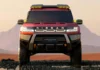
The Nissan Xterra is official at this point, though it doesn’t quite look like we expected.
Right now, the only “off-road” cars Nissan offers up are the Rogue and Pathfinder Rock Creek. Neither are any particular threat to, say, a Jeep Wrangler, a Ford Bronco or a Toyota 4Runner. The automaker is (finally) looking to change all that with a proper body-on-frame SUV folks have been anxiously awaiting since the last generation went out of production a decade ago: a new Xterra.
Fast forward to Monday evening, and Nissan gave everyone not just official confirmation that it is coming, but a teaser of what it will actually look like. When it finally arrives in production form, probably for the 2029 model year, the company will have a gas-powered and hybrid SUV capable of taking on the popular off-road competition.
In its official statement, Nissan says, “the all-new rugged [Xterra] SUV will be produced in the United States, further strengthening Nissan’s manufacturing footprint and capability offering for North American customers. The launch is targeted for late 2028 (emphasis added).”
Nissan didn’t offer any specific technical specs with today’s announcement. However, it did further affirm information we already had from earlier reports and recent executive statements. Namely, the new Xterra will arrive with a V6 powertrain, with or without hybridization in the mix.
As far as the styling, the new Nissan Xterra looks to get a boxy, brawny exterior with distinctive hood lines and three amber running lights across the top edge of the fascia (a throw to the old-school Pathfinders). Instead of a traditional grille, though, the SUV gets huge “NISSAN” script stamped into the front end, with three trapezoidal openings for the actual grille. Flanking those are the lower-mounted headlights, though all we can see here are three extra dash-like running lights in each assembly. Even with the brief silhouette, this definitely doesn’t look like any other Nissan, and that’s a good thing. The automaker needs this new Xterra to stand out against its rivals, and while there’s still a decent wait ahead of us, here’s hoping they can deliver a proper Wrangler and Bronco fighter.
The Xterra is just the start…
Alongside actually confirming the Xterra, there’s another important line in the company’s official statement. This body-on-frame platform may expand beyond the Xterra itself, with the company “exploring” as many as four additional new models on the same architecture. Nissan mentions the potential for pickups and “multi-row SUVs” alongside its new off-roader, across both the Nissan and Infiniti brands.
The key word there is “potential”, of course, so none of those are a given just yet. Nevertheless, we could be talking about a next-generation Frontier (makes sense, given the old Xterra was also based on the last-gen Frontier), as well as the supposed addition of a frame-built Pathfinder to the lineup. Alongside the Pathfinder, we could also see a next-generation QX60 go body-on-frame too.
The 2027 Chevrolet Corvette Grand Sport’s pricing sits right between the Stingray and Z06…and that’s a tempting proposition.
A few weeks ago, Chevrolet debuted the hotly anticipated C8 Corvette Grand Sport to the masses, packing a new V8 engine as well as another mid-range option between the base Stingray and the higher-end Z06, ZR1 and ZR1X. Now, the brand just confirmed 2027 pricing for the entire Corvette lineup, including the two Grand Sport models, so you know how much you can expect to pay (as always, assuming you can get one at MSRP). Here’s the good news: It’s not as much as you might think.
As the 2027 Chevy Corvette Grand Sport enters the lineup, it effectively replaces the E-Ray, which is rolling out of what is now a fairly crowded range of models. As such, it’s priced right in that ballpark between the Stingray and Z06. The LS6-powered Grand Sport starts off at $88,495, and if you want the more powerful (and electrified/all-wheel drive) Grand Sport X, that’ll cost you $112,195. Going for the convertible will set you back another $7,000 on top of that, while the performance packages range between $3,500 for a tire/brake upgrade and $20,695 for the full-blown track package.
Across the rest of the range, the base Stingray now starts off at $73,495. It’s worth noting, too, that the Stingray will also get the same LS6 V8 as the Grand Sport, packing 535 horsepower and 520 lb-ft of torque.
Above the Grand Sport models, the 2027 Corvette Z06 comes in at $121,395. Respectively, those price hikes are $1,000 and $1,700 more than last year. You’ll really want to hold onto your wallet when you look at the top end, though…because the ZR1 is now $197,195 (up $9,700), while the ZR1X is now $227,395 (up $15,200).
Orders for most 2027 Corvette models should open up later this week, on April 16. The Grand Sport X is an exception, however, as orders for that model won’t open up until later this summer.
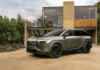
Hybrids are widespread across Toyota and Lexus’ vehicle lineups, and that could soon extend to the GX.
Toyota has been on a tear in recent years, insofar as virtually every one of its models across its mainstream offerings as well as the Lexus brand is now available with a hybrid powertrain. There are still a few notable exceptions, and one that stands out on the Lexus side is the GX 550 SUV. From launch, it’s only been available with a twin-turbocharged V6 gas engine, unlike its Toyota counterpart, the Land Cruiser 250 Series. That could soon change, though, as the automaker filed for the aptly named “GX550h” trademark, obviously nodding to a prospective GX Hybrid.
Frankly? While it may not be the most earth-shatteringly surprising news in the world, it is something the GX lineup needs. As gas prices continue to spike well above $4 per gallon on average in the U.S., too, a potential Lexus GX550h is coming not a moment too soon. The folks over at CarBuzz originally noticed the filing with the U.S. Patent and Trademark Office (USPTO), filed on March 16, 2026.
There is a little bit of weirdness with this trademark, as both the nonhybrid and hybrid variants of the new Lexus GX would have the same name. Barring the “h” at the end, which Lexus has used to separate its hybrids from the early days, it has not taken a similar approach with its recent offerings. The larger LX SUV, for example, gets the 600 designation for its gas-only version (using the same 3.4-liter twin-turbo V6 as the GX550). For the hybrid LX, we get 700h instead.
Nomenclature aside for a moment, the news here is that a hybrid GX is almost certainly coming. Lexus itself will not comment on future product, of course, but it tracks with everything else the company is doing. And again, if there’s ever a moment to launch a more efficient hybrid model, it’s right now. The standard Lexus GX550 is already a solid and premium luxury SUV, but there’s always been a downside: the fuel economy sucks (just 17 mpg combined).
There are a couple different routes Lexus could go as far as which hybrid powertrain a potential GX550h could use, too. The most straightforward approach, similar to the LX700h or Toyota Sequoia, would be to just go with the electrified version of the same twin-turbo V6 powertrain. The standard GX550 manages 349 horsepower and 479 lb-ft of torque, and sticking with the 3.4L-backed hybrid could bump that up to as much as 437 horsepower and 583 lb-ft. Not only is that a massive power improvement, but with the GX’s smaller stature against its full-sized siblings, we could see a couple more mpg out of it, too.
The alternative would be for the GX Hybrid to adopt the Land Cruiser’s powertrain. That would bring in a 2.4-liter gas engine, coupled to a hybrid system for a total of 326 horsepower and 465 lb-ft of torque. Sure, it’s not as powerful as the V6, but it’s still at least a torque bump over the GX550. It could also get even better fuel economy than a V6 hybrid, not to mention Lexus may have to go this route with the GX for packaging reasons (if not to maintain an incentive to upgrade to the hybrid LX, too). Effectively, going this route would give people a fancier upgrade over the Land Cruiser without sacrificing fuel economy in the process.
Either way, both hybrid powertrains are readily available, since they’re already entrenched in Toyota/Lexus’ latest SUV and truck lineups. We’ll have to wait and see what happens. While I’d normally hedge and say a trademark isn’t a guaranteed sign of what’s to come, I’ll make an exception here and say a GX Hybrid is a foregone conclusion. It was always going to happen, though the automaker may be even more motivated to get this model into showrooms ASAP.
So, you're shopping for a more adventure-focused three-row family SUV. Should you go for the 2026 Hyundai Palisade XRT Pro, or the Nissan Pathfinder Rock Creek?