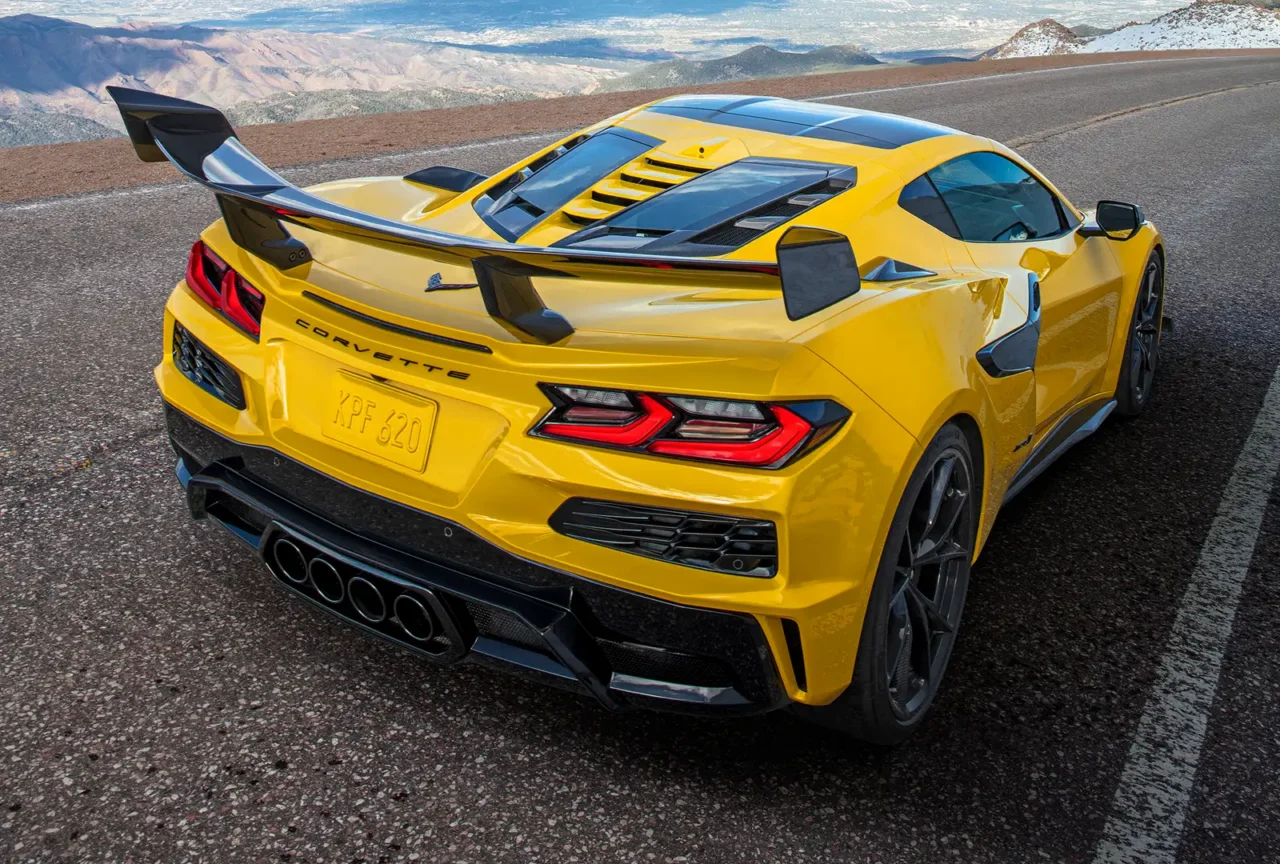
GM issued a small-scale, but significant recall and stop-sale affecting newer Chevrolet Corvette models.
There’s a new recall out of General Motors this week, as the automaker put out a remedial campaign and stop-sale on 2025 and 2026 Chevrolet Corvette models to address the rear turn signals. In a notification published through its recall website (shown below) and with the National Highway Traffic Safety Administration (NHTSA), the car may not notify the driver of a turn signal failure, increasing the risk of a crash and putting the affected Corvettes out of compliance with federal safety standards.
Essentially, other motorists may not know that a Corvette driver is signaling as the indicators are out, and the driver may not be aware there is an issue thanks to the lack of a notification in the cluster. Federal Motor Vehicle Safety Standards (FMVSS) demand all vehicles sold in the U.S. must have operable turn signals, and that drivers should get an indication when those signals fail to work as intended.
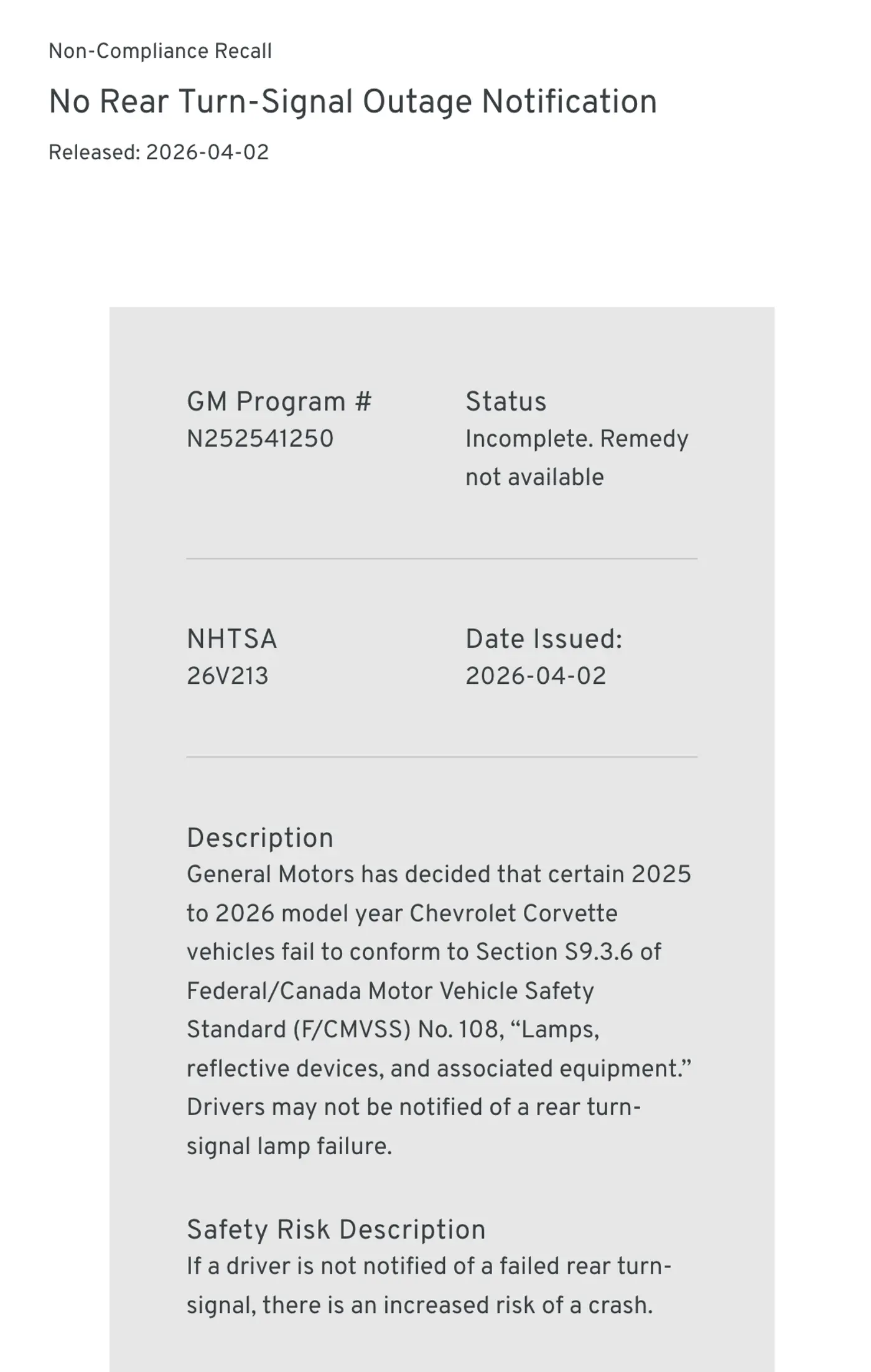
According to more details published over on Corvette Blogger, this issue affects 438 Chevy Corvette models from the 2025 model years, and as many as 2,886 examples from 2026. The company has an over-the-air software update for the cars’ exterior lighting control module to fix the issue. Owners who opt-in to OTA updates can eventually update their vehicles without having to go into the dealership, though that will be an option should they want a dealer technician to handle it instead.
So far, it seems a fix is only ready for 2026 models, so the few hundred 2025 Corvettes — including TFL’s Corvette Z06 — do not have a remedy available just yet. While General Motors does not explicitly mention a stop-sale as part of its recall notice, it has to fix new vehicles that are currently in dealer inventory before they can be sold. Vehicles that have safety-related issues are barred from sale until the issue is corrected, under U.S. law.